

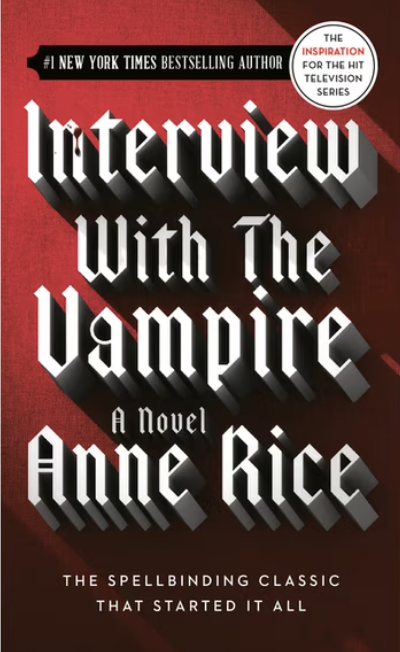
The grief in this scene is palpable. Knowing what Anne Rice had suffered makes it feel even more raw. Through a conversation among Claudia, Louis, and Madeleine, Rice transforms parental grief into something horror can hold: love stretched beyond its natural limits until it begins asking for the impossible. A dead child cannot be returned, but in this world, perhaps another child can be made immortal. Perhaps love can defeat death. Perhaps loss can be replaced.
Claudia asks Louis to turn a Parisian dollmaker named Madeleine into a vampire. To understand the desperation behind her request, you must remember that Claudia is trapped forever in the body of a five-year-old child. She has lived for decades and developed the mind and desires of an adult, but her physical appearance limits the power she can exercise in the world. She cannot move through human society independently without drawing suspicion. Among vampires, her small body and unusual creation leave her vulnerable.
Claudia knows Louis intends to leave her for Armand. Once he does, she will be alone and unprotected.
Her request to Louis is essentially this: Before you leave me for Armand, make this woman my mother.
Claudia needs Madeleine, but not only for companionship. She needs an adult body beside her. Essentially, a protector who can help her exist in a world that will always see her as a helpless child. She needs someone whose devotion will belong entirely to her. If Louis is determined to abandon their strange little family, Claudia intends to create another one.
Louis refuses at first. He has suffered ever since Lestat turned him into a vampire because his continued existence requires other people to die. He carries enormous guilt over what he is, and he does not want to inflict that existence upon Madeleine.
But there is something shaky about his resolve.
Louis knows Claudia hates him for allowing Lestat to trap her inside the body of a child. Her accusation weighs upon him, and you can feel it dragging through his entire demeanor. His guilt is not abstract anymore. It has a face, and that face will remain five years old forever.
When Louis questions Madeleine in the following scene, I already know he is going to surrender. But his decision is not what breaks my heart.
It is the dialogue between them.
Louis notices that Madeleine carries a lock of golden hair belonging to the daughter she lost. During their exchange, Madeleine begs him to turn her into a vampire because she wants to become Claudia’s mother. She wants this forever child; someone she can hold without fearing illness, age, or natural death.
Beneath her request, I hear something even more devastating: Give me a baby. Give me Claudia because she can never grow older than the child I lost. Give me this living doll who will remain small enough to hold forever. Give me Claudia as recompense for what death took from me.
Madeleine does not merely want to care for Claudia. She wants Claudia to fill the space left by her dead daughter.
Claudia is also searching for a replacement. She is losing Louis and wants Madeleine to fill the space he will leave behind. Each of them looks at the other and sees the answer to an absence. Madeleine needs a daughter who cannot die. Claudia needs a mother who will not abandon her.
Their connection contains genuine love, but it begins as a transaction between two wounds.
That broke me.
Claudia may have been inspired by Michele, Rice’s five-year-old daughter, who died of leukemia. Rice recognized herself in Louis’s grief, guilt, and brooding nature, while Lestat was inspired largely by her husband, Stan, before taking on parts of Rice herself.
As an author, I understand how pieces of a writer can become scattered among multiple characters. When readers ask whether one of my protagonists is modeled after me, I always say no that all of the characters are modeled after me. Granted, I sometimes say it to get a reaction, but there is truth in it. Every character carries some piece of me.
I write from a grain of truth. I take an experience from my life and use it as a seed in a fictional story. When I inhabit a character, I draw upon emotions, memories, and reactions I have experienced so that I can describe something imagined in a way that feels real.
I think that is one of fiction’s greatest powers. When writers tap into the raw emotions we have lived outside the fictional world and bring them into it, we create stories capable of capturing a reader’s attention and imagination. The circumstances may be invented, but the emotional truth is not.
As I read Madeleine’s plea, I kept thinking, Oh my God. This was Anne processing that pain.
I cannot know exactly what Rice consciously intended while writing the scene. Grief does not always enter a story because the writer invites it in. Sometimes it slips beneath the door. It divides itself among the characters and begins speaking through all of them.
In this scene, Claudia carries the terror of the child who knows she will be abandoned. Madeleine carries the desperation of the mother who could not save her daughter. Louis carries the guilt of the parent who helped create a child only to condemn her to an unnatural existence. Each of them wants love to repair something that cannot be repaired.
The loss of a child is an unimaginable pain. I would never claim to fully understand or encapsulate what that loss feels like. But fiction can give shape to emotions that ordinary language cannot contain. Rice could not undo death, but through Madeleine, she could imagine a grieving mother begging a vampire to kill her, make her immortal, and give her another child. A child death could never take away.
That is the horror of the scene.
Madeleine’s desire is understandable. It is also disturbing. She does not initially see Claudia completely as herself. She sees the five-year-old daughter she lost. Claudia becomes a second chance, a replacement, and a promise that Madeleine will never have to endure the same loss again.
But Claudia is not Madeleine’s dead child. She is not a doll, despite the physical resemblance Madeleine encourages by making dolls in her image. She is a woman trapped in a child’s body, asking to be protected but also desperate to be recognized as more than the appearance she cannot escape.
Louis sees Madeleine’s grief and recognizes something of himself in it. Perhaps that is why he finally caves. He understands what it means to want another person to fill an emptiness. He wanted Claudia for much the same reason. By turning Madeleine, he does not simply grant Claudia’s request. He participates once again in the fantasy that creating a family can heal the wounds each member brings into it.
That is why Interview with the Vampire is filled with love, but so much of that love feels corrupted. It has been stretched too far. Love becomes possession because it cannot tolerate separation. It becomes control because it fears abandonment. It becomes diabolical because it demands that the impossible be made possible to cover the pain of loss.
Madeleine wants a child who cannot die. Claudia wants a mother who cannot leave. Louis wants forgiveness from the daughter he helped condemn.
None of them can give the others what they truly need.
And that is where I hear Rice’s grief most clearly, not in a direct confession, but in the dialogue among three wounded people asking love to conquer death. The request is impossible. The love is sincere. The horror lives in what they are willing to create so they never have to lose it again.

Leave a Reply