

August 8 started heavier than I wanted it to.
The night before the Gothic Market, there had been some packing disputes and other things going on that put me in a less-than-great mood. So when I woke up on August 8—8/8, the Lion’s Gate Portal, of all days—I wasn’t exactly floating into the market on a cloud of good energy.
I remember thinking, I don’t know how this is going to turn out.
But I also know something about myself: I know how to put things into little boxes in my head when I need to and keep moving. Trauma taught me that skill long before I knew it could ever become useful. Sometimes the things we learn for survival find different purposes when we’re older.
So I told myself, I can do this.
And then I started thinking about what I had learned at Slasher Market.
I Needed to Stop Thinking About Selling Books
One of my biggest takeaways from Slasher Market was that I needed to engage more.
My sister worked markets for a long time, and when I talked to her about my first experience, she gave me some advice. Compliment people. Start conversations. Find something to talk about. Engage.
But what really changed my perspective was the way she explained why.
Even if someone doesn’t buy your book that day, they might remember you.
They might become a customer later.
Or maybe they never become a customer at all. Maybe they are simply somebody you connected with for a few minutes.
Once I thought about it that way, something clicked.
I wasn’t going to the Gothic Market just to sell books.
I was going there to connect with people.
And connecting with people? That I know how to do.
I do it constantly in my day job. I’ve learned how to walk into rooms, talk to strangers, find common ground, give information, and build relationships. Even some of the survival skills I developed when I was younger taught me how to read people, talk to them, and find those little threads of commonality that can turn a complete stranger into somebody you can have a genuine conversation with.
Good old trauma, apparently, still finding ways to make itself useful.
Once I reframed the market as another kind of job—one where my responsibility was to connect—I understood what I needed to do.
And I gave myself another goal.
At Slasher Market, I sold four books.
For the Gothic Market, I wanted to sell five.
That was it.
I’m a big believer in trying to get just a little better each time. I don’t believe my best is going to look exactly the same every day because I don’t arrive at every day with the same energy, resources, physical health, or mental capacity.
But if I can walk away knowing I did the best I could with what I had that day, I’m happy.
Five books.
One more than last time.
That was the goal.
Spoiler alert: things did not go according to plan.
Lesson One: Get Up From the Chair
Before the market opened, one of the vendors across (@willo_oakview) from me gave me another piece of advice.
“You’re going to have to stand. You can’t be sitting down.”
Well.
Okay then.
After setting up my booth, I had sat down for a little while to record some videos and post on social media about where I would be. But when noon hit, and the market officially opened, I stood up.
And I stayed up.
My husband was there helping me and sitting behind the table, and several times he asked if I wanted to sit down.
Nope.
I was committed.
I needed people to see me. I needed to be approachable. I needed to engage.
Standing changed the energy of my booth because I wasn’t sitting behind a table waiting for somebody to come talk to me anymore.
I was part of the space.
Other Vendors Are Part of Your Community
My sister had also told me something else before the market: talk to the vendors.
These are people I will probably see again.
They know about other markets. They know organizers. They know which events are good, which ones might work for my books, and what they have learned from doing this longer than I have.
So before the Gothic Market opened, I walked around twice.
I waved. I talked to people.
During my second walk, I noticed another author who had also been at Slasher Market. I went over and introduced myself again, and he was incredibly generous with his knowledge.
He talked to me about pricing, including potentially dropping the .99 from my book prices because whole-dollar pricing can feel simpler at markets. He suggested eventually having more books on my table so customers have more choices. He even talked about how he sometimes carries books from friends to broaden the selection at his booth.
And I listened.
One thing age and a lot of introspective work have taught me is that receiving feedback does not mean automatically implementing every piece of feedback you receive.
Twenty-something-year-old me sometimes treated advice like instructions.
Now I listen and ask myself:
Does this work for me?
Some things do.
Some things don’t.
And some things might work eventually, but I simply don’t have the resources to implement them yet.
The book selection was one of those things.
Why I’m Still Bringing My Children’s Book
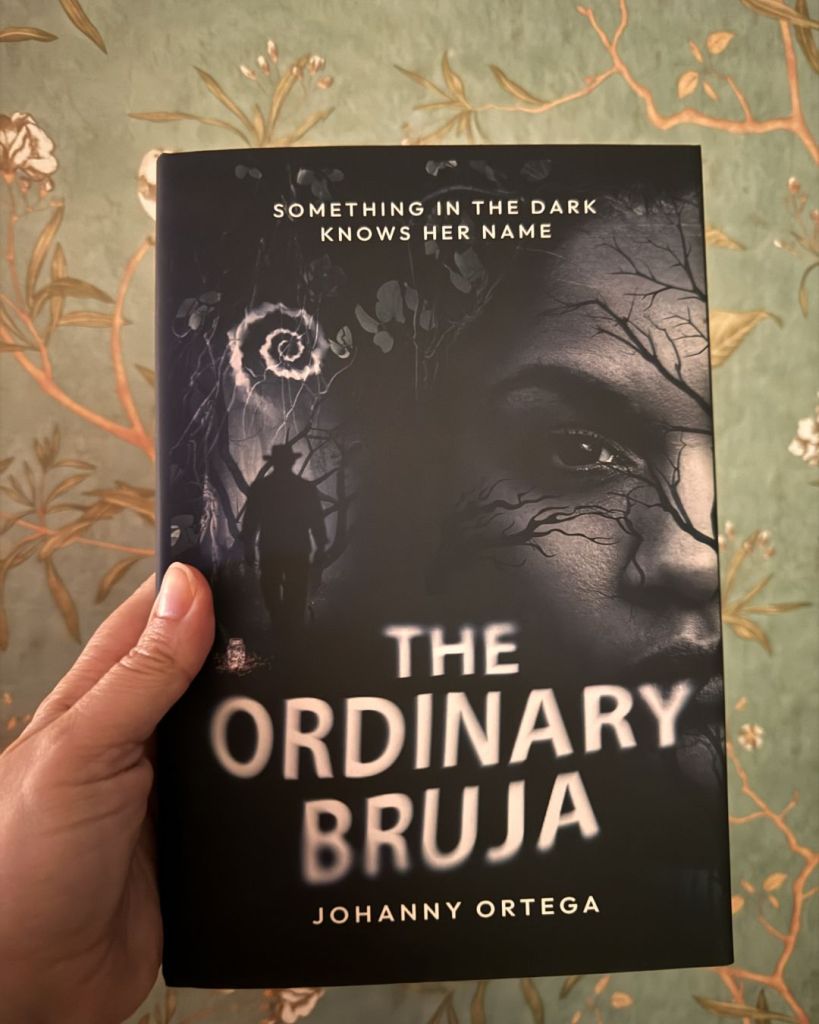
Right now, I bring two books to markets: my adult novel, The Ordinary Bruja, and my middle-grade novel, Mrs. Franchy’s Evil Ring and the Six Months That Changed Everything.
And I’m going to keep doing that.
I noticed something at Slasher Market that happened again at the Gothic Market: having books for different readers gives me more ways to make a connection.
Someone might approach my table and realize The Ordinary Bruja isn’t for them. Maybe they don’t read horror. Maybe they aren’t much of a reader at all.
But then I can ask:
Do you have a child who reads?
A grandchild?
A niece or nephew?
Suddenly, we’re having a completely different conversation.
There are children at these markets. There are parents and grandparents who want to encourage reading. And I have sold multiple copies of Mrs. Franchy’s Evil Ring because of exactly that.
So even though middle-grade books might be harder to sell at a gothic or horror-themed market, the book is staying on my table.
At my next event, I may bring one of my adult novellas too. As I publish more books, the table will naturally grow with me.
That is another lesson I’m learning through vending:
Build with what you have.
I don’t need to create the booth of an author with twenty published books when I don’t have twenty published books yet.
I can only work with the books and resources I have right now.
My Booth Decor Is Doing More Than Looking Pretty
One piece of feedback I received repeatedly was about my booth decor.
People loved it.
And that made me especially happy because almost everything on my table is there for a reason.
Mrs. Franchy’s Evil Ring sits on a suitcase because Isla temporarily leaves her mother’s home to stay with her father and his new wife; her new stepmother, who Isla is convinced is another wicked witch. I placed a creepy house beside the book because Isla also believes the house might be haunted.
Now the display isn’t simply decoration.
It gives me something to talk about.
The same thing happens with The Ordinary Bruja.
Near the book, I have a hand emerging upward with moths surrounding it, along with a mirror representing self-reflection. Marisol spends the book digging through the roots of a rotten family legacy and confronting everything she has tried to distance herself from.
Then there is probably my favorite part of the display.
I created what looks like a gothic dinner place setting with the words:
For the lady, would you like a rotten family legacy?
I saw people stop and read it.
That is exactly what I wanted.
It is funny and slightly ridiculous, but it also gives me an opening to tell them about The Ordinary Bruja: Marisol Espinal returning home, a generational legacy she has spent years rejecting, and the manipulative spirits tied to that history that eventually possess her best friend.
My booth helps me tell the story before someone ever picks up the book.
That is something I will absolutely continue doing.
Sometimes the Book Conversation Becomes Something Bigger
Some of my favorite conversations at the Gothic Market went beyond books entirely.
I talked with people about religion, religious deconstruction, spirituality, curanderismo, Santería, Las 21 Divisiones, ancestral practices, and the way traditions outside mainstream Christianity are so often automatically labeled evil.
That conversation is deeply connected to The Ordinary Bruja.
Part of what I explore through the book is what happens when cultural and ancestral practices become something people are taught to fear, reject, or feel ashamed of, especially after colonization and organized religion reshape how those traditions are viewed.
And suddenly I wasn’t pitching a book anymore.
I was talking to people.
That was exactly what I had hoped to learn how to do.
Give People a Way to Find You Later
Another thing that worked really well was making sure people could connect with me even if they weren’t ready to buy.
I had QR codes everywhere.
My stand-up banner had one leading to my website. I had another QR code for my newsletter. My business cards also have a QR code.
Essentially, there were multiple places around my booth where someone could scan something and find me later.
That mattered.
At one point, someone asked if The Ordinary Bruja was part of a series. When I explained that it is part of a trilogy, they still wanted a way to follow me even though they weren’t purchasing the book right then.
Maybe they are the kind of reader who waits until an entire series is finished.
I understand that.
I do that too.
The important thing was that the conversation didn’t have to end because a sale didn’t happen.
They could take my business card and find me again.
And apparently I underestimated how many people would want those cards because I ran out.
Lesson learned.
Bring more business cards.
I designed mine on Canva and splurged on having them professionally printed on deluxe paper with rounded corners. They use the same dark, mossy gothic green that runs through my Ordinary Bruja branding.
They looked good.
People told me they looked good.
The one thing I will change when I order the next batch is the font size. Some of the text is smaller than I would like, and I want the card to be more accessible for readers who may have difficulty seeing smaller print.
But I will absolutely keep professional business cards as part of my setup.
And Then I Sold Out
Remember when my goal was five books?
Well.
I sold out of The Ordinary Bruja.
All of them.
I also sold far more copies of Mrs. Franchy’s Evil Ring than I expected.
And then something happened that surprised me even more.
I sold out of my highest-priced item.
I had created a $30 Ordinary Bruja book bundle that included the book, a book sleeve, and other goodies. I only brought five because I wasn’t sure how people would respond to the higher price point.
They disappeared.
People loved the book sleeves. They loved the goodies. They loved having something that felt like more than simply buying a paperback.
I have already ordered more supplies for the next market.
That alone taught me something important: do not automatically assume customers will choose the cheapest option.
If something feels special and adds value to the experience, people may happily pay more for it.
And then I got my first tip.
A customer didn’t want their change back.
I remember thinking, Oh my God. I got a tip.
There was something incredibly moving about that.
People weren’t simply buying products that day. They were choosing to support artists. Writers. Makers. Human-created work.
There were people walking through that market who genuinely wanted to put their money behind people creating things with their hands, their imaginations, their stories, and their weird little obsessions.
I loved that.
It gave me hope.
What I’m Taking to the Next Market
By the end of the Gothic Market, my feet hurt. My joints hurt. My heels definitely hurt after standing for hours.
But I was happy.
I told my husband that it was still slightly less painful than spending hours working in a warehouse, so technically I was winning.
More importantly, the connections I made completely outweighed how physically tired I felt.
I left feeling strangely recharged.
And I’m taking a lot with me into the next event.
I’m going to stand instead of hiding behind my table.
I’m going to keep engaging people without making every conversation about purchasing a book.
I’m going to talk to other vendors because community is part of this business too.
I’m going to continue bringing books for both adults and younger readers because having options creates more opportunities for connection.
I’m going to keep using my booth decor to tell pieces of my stories.
I’m bringing more business cards.
I’m keeping the QR codes.
I’m creating more book bundles.
And eventually, I’ll add more of my adult books to the table.
But the biggest lesson is the one that changed everything before the Gothic Market even opened:
My job isn’t only to sell books. My job is to connect with people.
The selling can grow from there.
That framing completely changed the way I experienced this market.
I went into the Gothic Market hoping to sell one more book than I had at my previous event.
Instead, I sold out of The Ordinary Bruja, sold out of my book bundles, met readers, talked about books and culture and spirituality, learned from other vendors, made what I hope is a new vendor friend, and left already thinking about what I can improve next time.
That is the kind of progress I want.
Not perfection.
Not trying to become an expert vendor after two markets.
Just learning something every time I set up that table.
Ten percent better.
One market at a time.

Leave a Reply