

There is a very specific kind of joy that comes from seeing a manuscript grow again after it stopped feeling alive.
That is where I am with The Forgotten Bruja.
For a while, I had a draft. Technically, yes, I had words. I had scenes. I had Isadora Espinal on the page. I had pieces of the story I knew mattered. But something about it wasn’t clicking. It had the bones, but the bones were not standing the way they needed to stand. And because this book is not just a prequel or a “what happened before” kind of story, I knew I couldn’t just keep pushing forward and hope the manuscript would eventually figure itself out.
The Forgotten Bruja is Isadora’s story. It is the story of a woman who left because freedom felt impossible inside the life her family handed her. It is gothic psychological horror with magical realism, but underneath the ghosts, the ancestral magic, the family secrets, and the strange town history, it is about responsibility, inheritance, resentment, silence, and the kind of woman history tries to bury because she refuses to be easy to control.
So when the book wasn’t clicking, I had to listen.
First, I rewrote the first act. That helped me understand Isadora better. It helped me slow down and really see what she was walking into when she returned to Willowshade. Then I outlined the whole book again, but not in a quick digital bullet-point kind of way. I sat down with a notebook and manually wrote out each scene from beginning to end. Scene by scene. Beat by beat. I needed to understand the emotional logic of the book, not just the plot mechanics.
And honestly? That little outlining notebook has become one of the most grounding parts of this redraft.

Right now, I am redrafting from Act 2 and following the outline I created by hand. I am well into the second act and hovering right at the edge of 30K words. And yes, the word count motivates me. I am not going to pretend it doesn’t. Watching the number rise makes the work feel visible. It tells me that even when the draft feels slow, even when the scene takes longer than expected, even when I’m questioning whether I’m doing enough, I am still moving.
But the word count is not the only thing keeping me going.
It is also the blue checkmarks.
Every time I finish drafting a scene that matches a scene paragraph in my outlining notebook, I put a little blue checkmark next to it. That tiny mark has become more satisfying than I expected. It is proof that I did not just write random words. I completed a scene that belongs to the structure I built. I followed through on a beat. I moved Isadora closer to whatever she is trying to avoid and whatever the story is determined to make her face.
There is something deeply calming about that.
I still have a ways to go. I am not even at the midpoint yet. This book is still very much in progress, and I am still discovering the texture of it as I write. But having that notebook beside me gives me peace of mind because it reminds me I have a way forward. I am not wandering through the woods in the dark without a flashlight with Isadora. Well, maybe emotionally I am. But structurally? I have a lamp; a map.
And for a book where maps, hidden places, family history, and buried landmarks matter, that feels very fitting.
Today also reminded me why I do not research too much ahead of time.
I know some writers love doing all their research before drafting. They build giant folders. They gather historical details. They collect references before writing a single scene. I admire that. I really do.
But I am not built that way.
If I research too early, I get too happy in the rabbit hole. I go in looking for one small thing, find something shiny on the side, click on that, then suddenly I am no longer drafting a gothic horror novel. I am learning historical cigar lore, Cold War politics, tobacco trade details, and weird presidential anecdotes that may or may not make it into the book.
Which is exactly what happened today.
All I needed was a realistic detail about cigars in the late 1960s. I had written a line about the lingering smell of a Dominican cigar and wanted to understand the appetite for Cuban cigars at that time. I wanted the detail to feel grounded. Not over-explained. Not like a history lecture. Just real enough that when Isadora smells that cigar smoke, the moment carries weight.
And then I found the JFK cigar story.
According to the widely repeated account from Pierre Salinger, Kennedy’s press secretary, JFK asked him to get around 1,000 Cuban cigars before the Cuban embargo took effect. Salinger reportedly came back with 1,200 H. Upmann cigars, and Kennedy signed the embargo order after hearing the cigars had been secured. The embargo was imposed in February 1962, several years before the 1968 setting I was researching for Isadora’s world.
That is exactly the kind of historical detail that makes me stop and stare at the wall.
Not because the detail itself necessarily belongs in the scene, but because it tells me something about the world around the scene. It tells me what Cuban cigars represented. Luxury. Desire. Status. Access. Something people wanted badly enough to hoard before politics made it forbidden. And if Cuban cigars had that kind of cultural weight, then the smell of a Dominican cigar in Isadora’s world can carry its own layered meaning. It can signal masculinity, power, memory, class, old-world control, and the kind of presence that lingers even after the man is gone.
That is the beauty and danger of research.
Research gives the story texture. It helps me avoid writing vague historical vibes. It gives me the confidence to place a sensory detail in the scene and know it is not floating in empty air. But research can also trick me into thinking I am working when I am actually avoiding the harder part, which is drafting the scene.
Today, because I was already in drafting mode, I had enough willpower to stop.
I let myself enjoy the rabbit hole. I tucked the information away. Then I went back to Isadora.
That feels like growth.
Because this redraft is not about chasing every possible interesting fact. It is about making sure every scene earns its place. It is about making sure Isadora’s emotional journey lines up with the mystery she is uncovering. It is about making sure the horror does not come only from ghosts or magic, but from the realization that family history can be manipulated, erased, and weaponized.
That is what The Forgotten Bruja is teaching me as I draft it.
Progress is not always clean. Sometimes progress looks like rewriting an entire first act because the story was not telling the truth yet. Sometimes it looks like handwriting every scene because your brain needs the slowness of pen on paper. Sometimes it looks like a number creeping toward 30K. Sometimes it looks like a blue checkmark in a notebook. And sometimes it looks like closing the research tab before it swallows your whole writing day.
I am not at the midpoint yet, but I can see the path.
And for now, that is enough.
The Forgotten Bruja is coming together scene by scene, checkmark by checkmark, ghost by ghost.
Support the Production of The Forgotten Bruja
Every pre-order helps cover the real costs of bringing this book to life, from editing and cover design to formatting, printing, and distribution.

The Forgotten Bruja: Book Two of Las Cerradoras Series by Johanny Ortega
Isadora was so dangerous that she was forgotten. That is, until now.
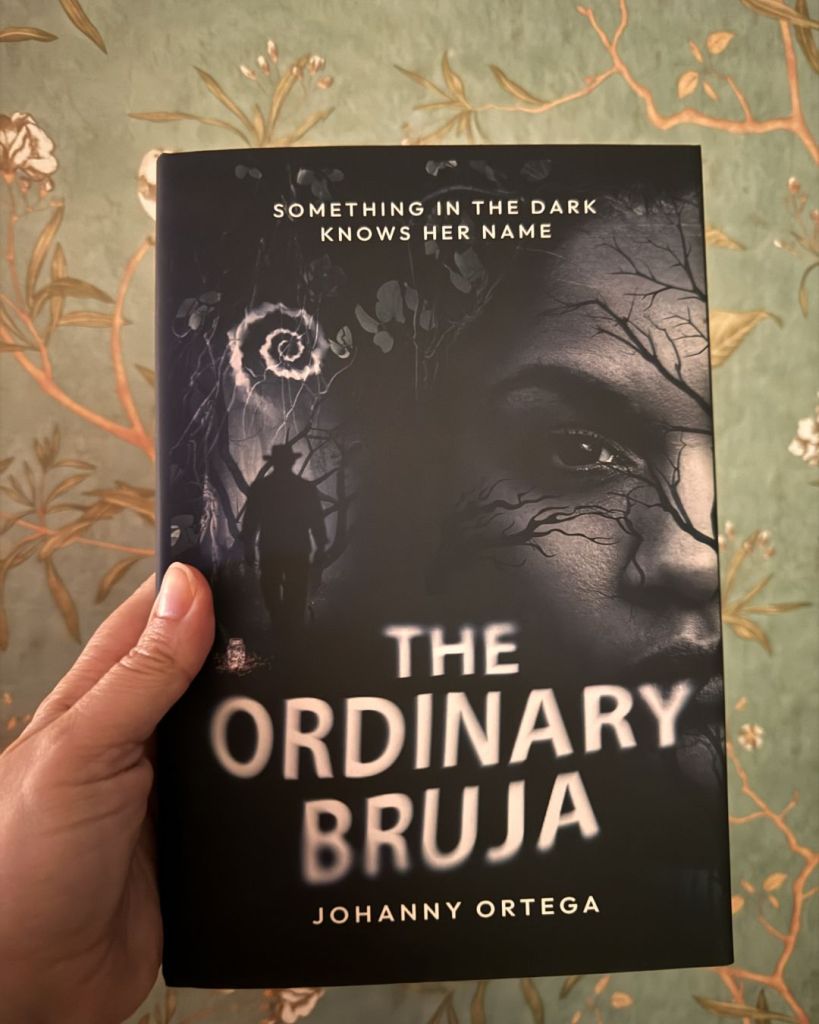
The Forgotten Bruja is a haunting, character-driven novel about the woman erased from her family’s story and the legacy she never asked to carry. Set decades before The Ordinary Bruja, this book follows Isadora Espinal as she chooses exile over obedience, freedom over silence, and truth over inherited fear.
Blending Dominican magical realism, psychological horror, and gothic family drama, this is a story about dangerous women, generational curses, and what happens when a bruja refuses to disappear quietly.
Perfect for readers who love atmospheric prose, feminist horror, and stories where ancestry, identity, and power collide.
While this book is part of a series, it can be read as a standalone.

Leave a Reply