
Mother’s Day is tender, beautiful, complicated, and sometimes a little sharp around the edges.
For some people, it is flowers, brunch, and easy captions about love. For others, it is grief. For some, it is a day spent honoring the women who raised them while also quietly making peace with the ways those same women hurt them, failed them, shaped them, and survived their own lives imperfectly.
I think that is why I write complex mothers.
Because that is what I know.
I write women who love deeply but do not always know how to show it. Women who protect and wound in the same breath. Women who carry children, households, traditions, secrets, grief, resentment, survival, and shame on their backs, all while being expected to do it gracefully. Quietly. Without complaint. Without falling apart.
And the thing is, many of them do fall apart.
Sometimes loudly.
Sometimes silently.
Sometimes in ways their children do not understand until decades later.
A big part of my childhood is gone. I simply do not remember it. There are chunks missing, and while people can infer what they want from that, I have reached a place where I have let it go. I figure there is probably a good reason I do not remember certain things. Maybe it was self-preservation. Maybe my mind did what it needed to do so I could keep going.
And honestly?
That is okay with me.
I do not need to dig through every locked door inside myself to prove that what I felt was real. I do not need every memory in perfect order to understand that childhood leaves marks, even when the details blur. Sometimes what remains is not the full story but the emotional residue. A smell. A phrase. A warning. A silence. A look from an adult that told you whether you were safe or not.
The memories I do have are centered around women.
My grandmother, the woman who raised me.
My biological mother.
My stepmother.
My sister.
All of these women had a hand in shaping my childhood. Not in one clean, easy, inspirational way. In many ways. Some soft. Some painful. Some confusing. Some necessary. Some I am still probably unpacking through fiction because that is what writers do. We take the things that haunt us, dress them in different clothes, and let them speak.
When I became a mother, and then later a stepmother, something shifted in how I looked back.
Motherhood did not suddenly make everything that happened okay. I am not one of those people who believes understanding someone’s pain automatically cancels out the harm they caused. That feels too neat to me. Too convenient. Too eager to rush toward forgiveness before telling the truth.
But motherhood did give me more compassion.
It helped me look back and see the women in my life not only as mothers or caretakers, but as human beings. Women with limited choices. Women who were also shaped by poverty, patriarchy, migration, silence, religion, culture, survival, and the expectations placed on them. Women who were asked to raise children while carrying wounds nobody helped them name.
At the same time, I still hold on to the realistic anger I had when looking back.
Because both things can be true.
I can understand why someone acted the way they did and still know that it hurt me.
I can have compassion and still refuse to romanticize harm.
I can love the women who shaped me and still admit that some of what shaped me was neglect.
As an adult, I realized that I had been parentified and neglected in various forms when I arrived in the United States. That realization did not come all at once. It came slowly, through adulthood, through therapy, through motherhood, through marriage, through moments when something small would hit me harder than it should have. Then suddenly I would understand that my reaction was not really about the present moment. It was about something older.
Something buried.
Something I had learned to survive before I had the language for it.
I also know I romanticize the time I spent in the Dominican Republic, being raised by my grandmother. In my mind, that time feels warmer. Softer. Rooted. There is a kind of safety in how I remember her care, even if that safety was imperfect. My grandmother was a product of her time. She carried that old-school silence so many women carried. The kind of silence that kept households together on the surface while allowing harm to move underneath.
That kind of silence fascinates and angers me.
It is something I explore in The Forgotten Bruja, because silence is rarely empty. Silence can be protection. Silence can be fear. Silence can be complicity. Silence can be survival. Silence can be the thing women inherit because nobody gave them another tool.
One memory I still carry clearly is my grandmother advising me to be submissive to the person I married.
I was a little kid, and I remember being angry. Oh my God, I was so angry.
I remember thinking, I don’t ever want to get married.
Because even then, something in me rejected the idea that love required erasure. That being a wife meant shrinking. That marriage meant obedience. That a woman’s peace depended on how well she could bend herself around someone else’s will.
Eventually, I did get married.
But I did it on my own terms.
I did not do it by losing myself. I did not do it by becoming small. I did not do it by mistaking silence for devotion.
That is the kind of tension I bring into my writing. The tension between what we were taught and what we choose. The tension between honoring the women who came before us and refusing to repeat every lesson they handed down. The tension between love and harm. Between gratitude and anger. Between inheritance and liberation.
Whenever I write a mother or a woman in my books, I write her with all that nuance.
I do not want to write perfect mothers. Perfect mothers do not interest me because perfect mothers do not feel real. I want to write the mother who loves her daughter but does not know how to apologize. The grandmother who protects the family while also protecting the wrong man. The stepmother who is trying but still enters a child’s life at the worst possible emotional moment. The sister who becomes a caretaker before she ever gets the chance to be fully young herself. The mother who disappears emotionally because she is drowning. The woman who makes the wrong choice because every choice available to her is bad.
Those are the women I understand.
Those are the women I have known.
Those are the women who walk into my stories carrying grocery bags, rosary beads, secrets, resentment, tenderness, and old wounds. They are not villains, though sometimes they cause harm. They are not saints, though sometimes they save people. They are human beings trying to survive inside systems that have never been kind to women, especially women expected to raise children and keep families together while being denied full autonomy over their own lives.
That is why my books return again and again to mothers, daughters, grandmothers, aunties, sisters, and women who mother without ever being called mothers.
Because family is not simple.
Motherhood is not simple.
Womanhood is not simple.
And I refuse to flatten these women into easy symbols.
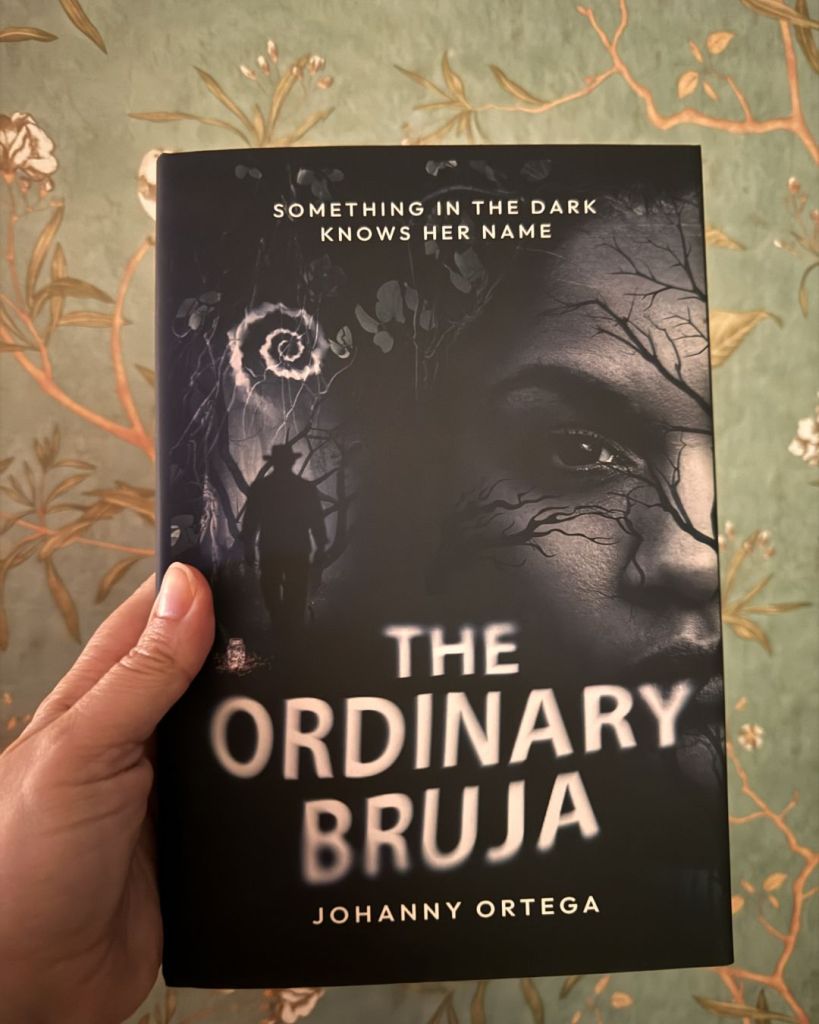
In The Ordinary Bruja, Marisol’s grief is tied to her mother, Josefina, but it is also tied to everything left unsaid between them. It is tied to the stories Marisol stopped listening to. It is tied to the way love can be present and still misunderstood. In The Forgotten Bruja, I get to dig even deeper into the women who came before Marisol, especially the ones whose choices created ripples they could never fully control.
That is where the horror lives for me.
Not just in ghosts.
Not just in curses.
Not just in the supernatural.
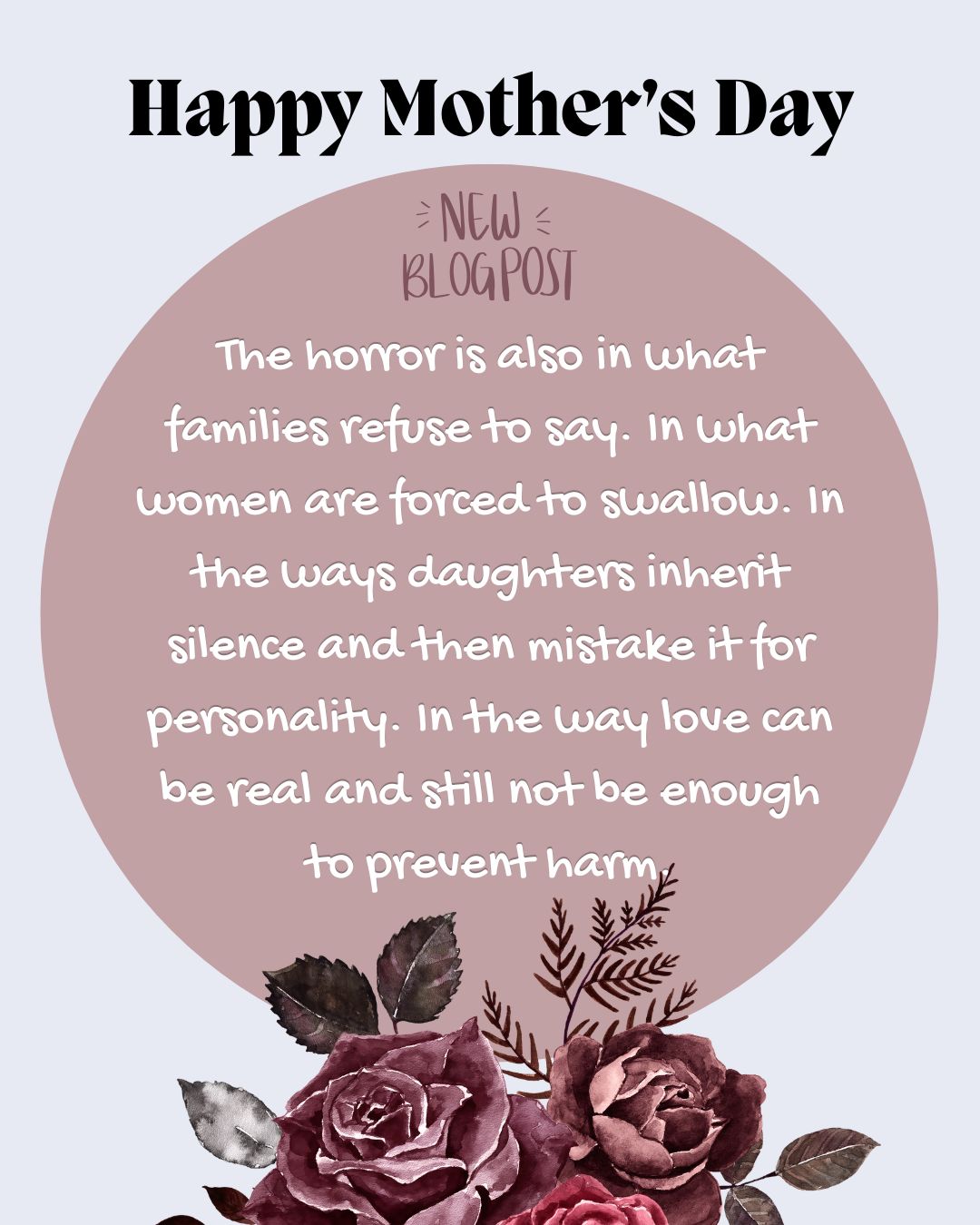
The horror is also in what families refuse to say. In what women are forced to swallow. In the ways daughters inherit silence and then mistake it for personality. In the way love can be real and still not be enough to prevent harm.
I no longer hold grudges over the memories I lost or the memories I still carry.
That does not mean I pretend everything was fine.
It means I have stopped letting those gaps define me as broken.
Those missing pieces have become part of my creative language. The memories I do have, the women I remember, the anger I felt, the compassion I later earned, all of it has become color. Texture. Shadow. Light.
They have become the colors with which I draw the women who walk the pages of my books.
So on Mother’s Day, I honor the complexity.
I honor the women who raised me.
I honor the child who noticed more than adults thought she did.
I honor the mother and stepmother I became.
I honor the anger that protected me.
I honor the compassion that softened me without making me forget.
And I honor the stories that came from all of it.
Happy Mother’s Day.

Leave a Reply