
When my son was little, I took him to an appointment to discuss his developmental progress. I was a young, twenty-year-old mother with dreams of building a personal library, reading beside my child, and encouraging him academically, just as my grandmother had encouraged me.
A speech specialist told me my son was behind in the number of words he should know.
Then she looked at me and asked, “You speak Spanish, right?”
The question startled me, but I answered yes.
She explained that because I spoke two languages at home, my son wasn’t fully grasping either one. She warned me that he could be left behind once he started school.
That terrified me. Education (especially reading) had always been deeply important to me. I immediately asked what I needed to do to help him.
“Speak only English,” she said. “That’s the language he needs to know.”
Then she asked, “You don’t have a husband at home, right?”
Once again, I was shocked by the question. But she was correct: I was a single mother.
She said that if there had been another parent in the home, she might have suggested that one of us speak English while the other spoke Spanish. But since that was not my case, I had to pick and stick to one language, and she explained that that language needed to be English because that is what is spoken at school. I immediately got images of being teased for having an accent, of being in a bilingual program for one year until I learned English, and I didn’t want to put that on my child. But I was conflicted because I also wanted my son to be bilingual like me. But when the speech specialist said that my son would be behind at school, that scared me.
I remember leaving that office grieving because I was leaving behind something. I was leaving behind a part of me that I would not pass down to my child. It was as if I had given away part of his inheritance, and it all happened because I was scared of what would happen.
The Power of Fear
Fear is one of assimilation’s most effective weapons.
Fear of being left behind.
Fear of being perceived as different.
Fear that the language connecting you to your family and culture will become an obstacle to your child’s success.
Years later, when I began developing Marisol Espinal for The Ordinary Bruja, I knew she wouldn’t speak Spanish. I knew she wouldn’t begin the story with pride in her Dominican identity. Somewhere in her family’s history, those connections had been stripped away by fear long before she was born.
Marisol inherited that fear as though it had been interlaced into her DNA.
In The Ordinary Bruja, I challenge Marisol to do what I eventually had to challenge myself to do: embrace every part of herself—including the parts she had been taught to hide, reject, or feel ashamed of.
Because sometimes the horror isn’t merely losing a language.
It’s being convinced that losing it is the price of belonging.
What part of your language, culture, or identity have you had to reclaim?


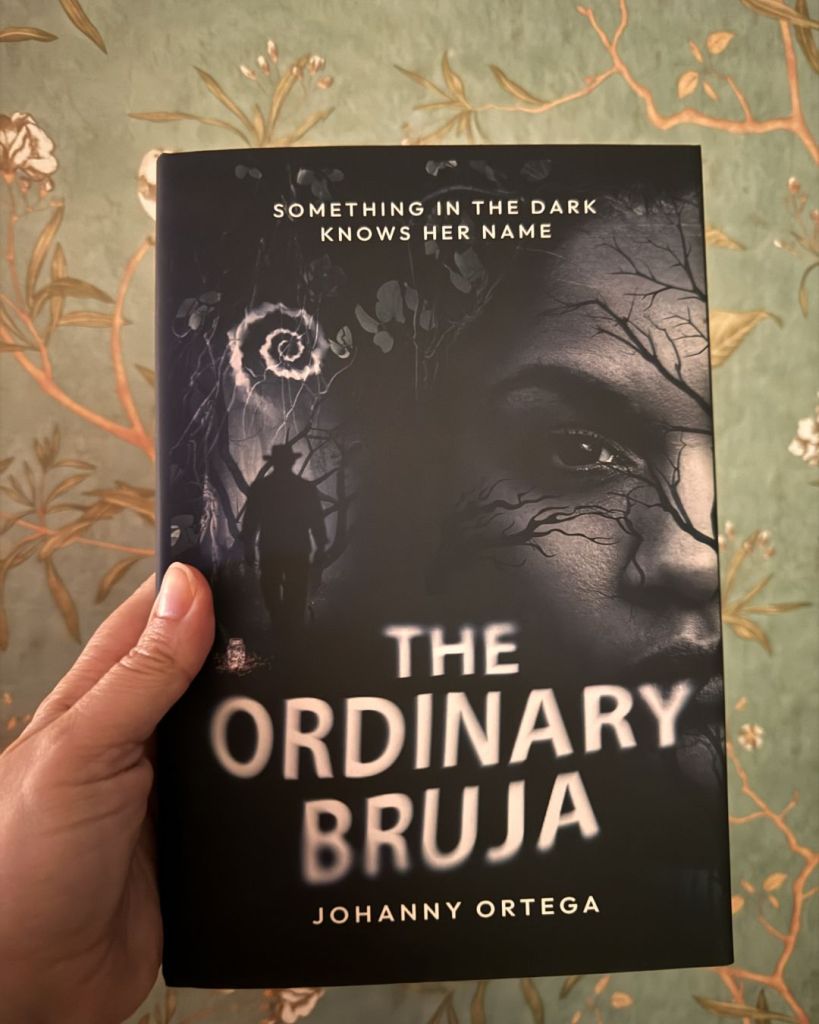
The Ordinary Bruja: Book One of Las Cerradoras Series – Johanny Ortega
Marisol Espinal has spent her life trying to disappear from her family’s whispers of magic, from the shame of not belonging, from the truth she refuses to face. She’s always wanted to be someone else: confident, capable, extraordinary.
But when strange visions, flickering shadows, and warnings written in her mother’s hand begin to stalk her, Marisol is forced to confront her deepest fear: what if she isn’t extraordinary at all? What if she’s painfully ordinary?
Yet Hallowthorn Hill doesn’t call to just anyone. And the more Marisol resists, the stronger its pull becomes. The past she’s buried claws its way back, and something in the mist is watching—waiting for her to remember.
If Marisol cannot face the truth about who she is and where she comes from, the same darkness that destroyed her ancestors will claim her, too.
Somewhere in the shadows, something knows her name.
And it’s time for Marisol to learn why.

Leave a Reply