
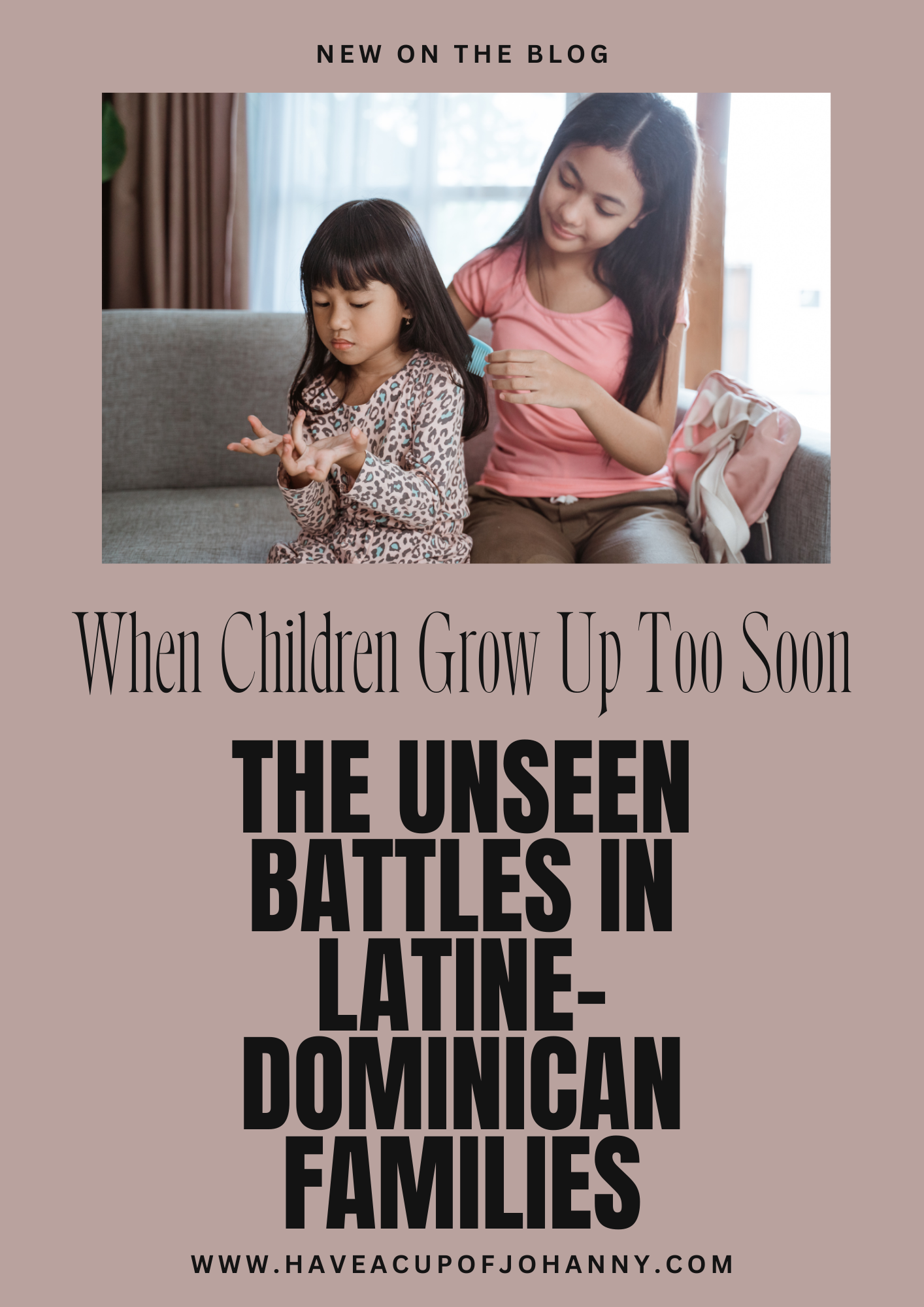
In the heart of Latine-Dominican culture lies a complex, often unspoken phenomenon: the parentification of the eldest child. Through the story of Isla Delgado in “Mrs. Franchy’s Evil Ring,” this nuanced subject is explored with depth and empathy. Isla’s experiences of premature maturity, academic challenges, and the weight of familial obligations echo the silent sacrifices made by many eldest children within immigrant families. This narrative isn’t just storytelling; it’s a reflection of real-life struggles and resilience.
Parentification, the process where a child assumes adult roles far too early,
The theme of parentification strikes a personal chord with me, especially when reflecting on my sister’s journey and the responsibilities she took on after we moved from the Dominican Republic. You see, I didn’t have many life skills when I came to the United States. I didn’t know how to do my hair, couldn’t wake up on time, couldn’t manage time, and you may think, well, that doesn’t matter. But to a child whose mother thinks they need no parenting because they are eleven years old and should know all these things, this meant that I would have been left behind. But my sister didn’t allow that to happen. She became my defacto mom since ours focused more on our younger siblings. While my sister didn’t complain (all that much), the emotional and practical toll these duties put on her were often overlooked, never rewarded, and shaped her life and who she is today. While I love her for stepping up, I also feel guilt for being the reason she needed to step up.
I show this in Mrs. Franchy’s Evil Ring. It is one of the two things the family needs to work on. But you have to read the book and tell me the other one. (Let me know in the comments)
Yet the parentification of the oldest child, especially the oldest femme child, is something we don’t talk about enough. Still, to this day, I see this practice. I hear comments from parents who are thankful to have an older child who can help them with the younger one. Don’t get me wrong, there is nothing wrong with helping. But there is a line parents cross when a child is the one who is in charge of waking up, dressing, feeding their sibling and ensuring they do their homework and are entertained. To me, that’s the job of a nanny and a parent, not the sibling.
Nevertheless, I urge you to engage with “Mrs. Franchy’s Evil Ring” not merely as readers but as participants in a larger discussion about Dominican blended families and Latine culture’s impact on identity and family dynamics. This story offers a lens through which to view the broader realities facing many families, providing a platform for understanding and conversation.
So let’s start a conversation about the intricacies of cultural expectations and their effects on family roles. Share your own narratives in the comments. Navigate the stories within “Mrs. Franchy’s Evil Ring,” let’s keep the dialogue alive. Your experiences, challenges, and triumphs in the face of parentification add vital perspectives to our collective understanding. How has taking on adult roles early in life shaped you? How do cultural norms influence your family dynamics?
By sharing, you’re contributing to a space where every narrative is valued and every voice can resonate. This isn’t just about sharing stories; it’s about building a community that sees and supports each other. Dive into the discussion and help enrich our collective narrative.
Visit the bookshop to read more and join our ever-growing family. Together, we can advocate for recognition of the richness and complexity of diverse cultures.
Love,
Joa

Leave a Reply