

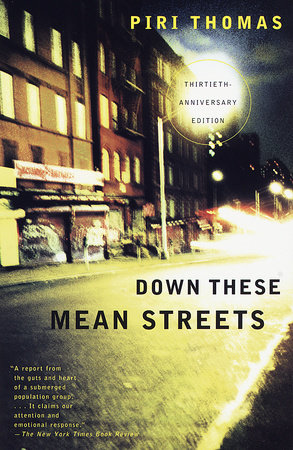
Piri Thomas’ Down These Mean Streets is a seminal memoir that delves deep into the complexities of racial identity, systemic oppression, and personal redemption in mid-20th-century America. Born Juan Pedro Tomas to Puerto Rican and Cuban parents, Thomas grew up in Spanish Harlem, navigating the challenges of poverty, discrimination, and the search for self-understanding.
Published in 1967, the memoir chronicles Thomas’s tumultuous journey through gang involvement, drug addiction, and incarceration. His candid narrative sheds light on the internal and external struggles faced by Afro-Latinos in a society rife with racial prejudice. Thomas’s darker complexion often led to his identification as Black, causing tension within his own family and community, who sometimes denied their African heritage .
One of the most compelling aspects of Thomas’s work is his exploration of dual identity. He grappled with being both Latino and Black in a world that often forced individuals into singular racial categories. This internal conflict is poignantly depicted in his interactions with family members who favored lighter skin tones and in his experiences with systemic racism, both in the North and the segregated South.
Thomas’s time in prison became a period of profound self-reflection. He began to write, using his experiences to craft a narrative that was both personal and universally resonant. His raw and unfiltered prose captures the essence of street life, the allure of belonging, and the harsh realities of marginalized communities. The memoir’s linguistic style, blending English with Spanish phrases, adds authenticity and rhythm to his storytelling.
Beyond its literary merits, Down These Mean Streets has had a significant cultural impact. It stands as a foundational work in the Nuyorican literary movement, giving voice to the Puerto Rican diaspora’s experiences in the United States. Thomas’s unflinching honesty paved the way for future generations of writers to explore themes of identity, race, and resilience.
For me, Thomas’s storytelling underscores the importance of authenticity. His courage to share his truth reminds writers everywhere that their voices matter, especially when they challenge norms and amplify underrepresented experiences. His work serves as a powerful reminder that through vulnerability and honesty, literature can bridge cultural divides and foster understanding.
In today’s world, where discussions about race, identity, and belonging remain ever-relevant, Down These Mean Streets continues to resonate. It’s not just a memoir; it’s a testament to the enduring human spirit and the transformative power of storytelling.

Leave a Reply