
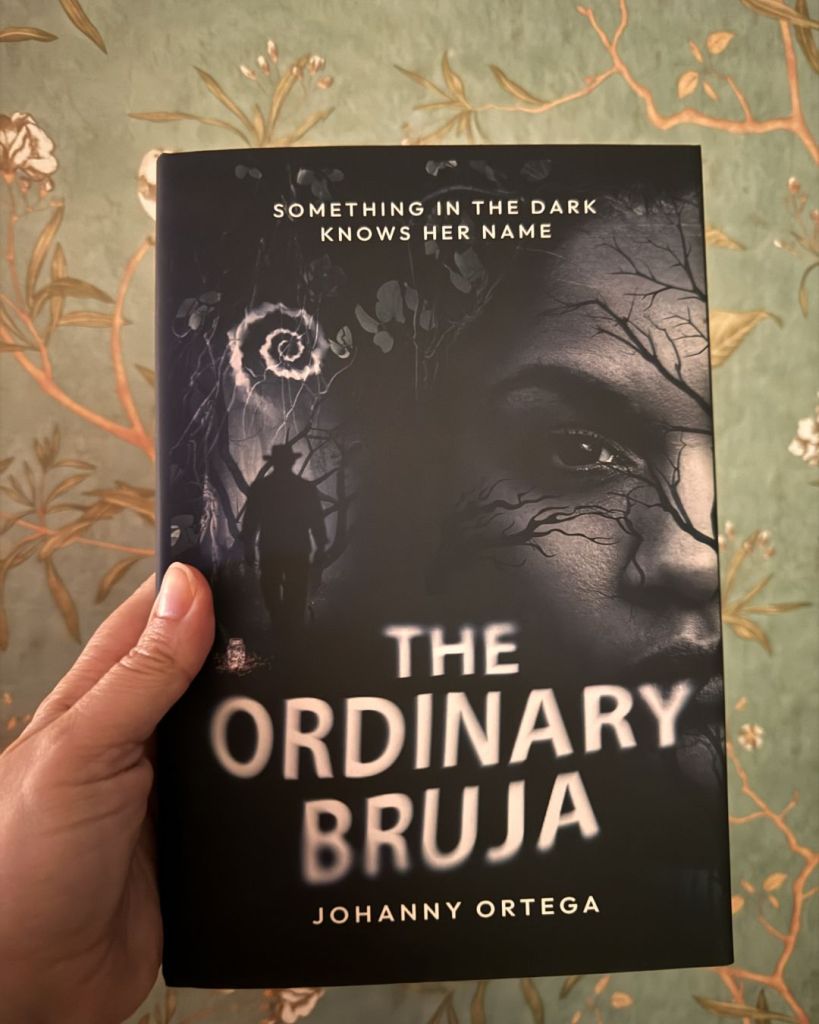

I did not plan to make spring spooky.
Spring is usually marketed as the season of blooming flowers, pastel colors, iced coffee walks, and pretending we are all emotionally reborn because the sun came out for five minutes. But my Spring 2026 reading life had other plans. Somewhere between Cackle by Rachel Harrison, The Eyes Are the Best Part by Monika Kim, and Trad Wife by Saratoga Schaefer, I realized I had accidentally created my own seasonal reading event.
I am calling it Springaween.
Because apparently, while everyone else was welcoming fresh starts, I was reading about women unraveling, transforming, biting back, and becoming strange enough to survive.
And honestly? That feels right.
There is something deliciously fitting about reading horror and horror-adjacent books in spring. The season is obsessed with rebirth, but rebirth is not always gentle. Sometimes becoming yourself looks less like a flower blooming and more like a woman standing in the kitchen, realizing the life she was handed was too small, too fake, too polished, too suffocating. Sometimes transformation is ugly. Sometimes it is funny. Sometimes it is gross. Sometimes it is supernatural. Sometimes it is simply a woman saying, “Actually, no.”
That is where weird girl lit comes in.
Weird girl lit is not just about quirky women doing strange things. At least, not to me. It is about women whose inner lives refuse to stay polite. It is about women who have been told to shrink, smile, forgive, assimilate, perform, behave, or become more palatable, only for something inside them to say, “I don’t think so.”
And that something is often where the horror begins.
The Weird Girl as a Threat
One of the reasons I love horror is because horror tells the truth sideways.
A woman’s anger becomes a haunting. Her hunger becomes monstrous. Her loneliness becomes a witchy little town. Her grief becomes a ghost. Her refusal to follow the script becomes something unsettling enough that everyone around her starts to panic.
That is why weird girl lit works so well inside horror and horror-adjacent fiction. It gives women permission to be complicated in ways society often punishes in real life.
A weird girl is not always likable.
She is not always healed.
She may make bad choices.
She may obsess.
She may spiral.
She may laugh at the wrong time, want the wrong thing, desire something sharp, or feel a strange little thrill when the mask finally slips.
But that is what makes her interesting.

In Cackle, Rachel Harrison gives us a woman whose life has cracked open after a breakup, only for her to find herself drawn into a world that feels cozy, witchy, and deeply suspicious in the best way. It has that sharp Rachel Harrison flavor I enjoy: funny, snarky, feminine, and quietly unsettling. But underneath the humor is a question that shows up again and again in weird girl stories: what if the life you were mourning was not the life you were meant to keep?
That question is terrifying because it forces the main character to confront the possibility that the thing she lost may have been the cage.

Then there is The Eyes Are the Best Part by Monika Kim, which leans into body horror, obsession, hunger, and feminine rage in a way that feels impossible to ignore. This is the kind of book that understands horror is not always hiding outside the house. Sometimes it is sitting at the dinner table. Sometimes it is in what we are expected to swallow. Sometimes it is in the way women are taught to endure disrespect until something inside them mutates.

And Trad Wife by Saratoga Schaefer fits so well into this conversation because the “perfect woman” performance is already horror-adjacent. The clean kitchen. The pretty dress. The smiling wife. The curated obedience. The fantasy of a woman who exists to make someone else feel powerful, masculine, righteous, or in control. There is something deeply creepy about that kind of performance because it asks women to disappear inside an aesthetic.
And weird girl lit says: what if she refuses?
What if the perfect wife becomes strange?
What if the lonely woman becomes powerful?
What if the grieving daughter becomes dangerous?
What if the girl who was told she was too awkward, too emotional, too dramatic, too angry, too much, finally stops apologizing?
Horror Loves the Woman Who Won’t Behave
The more I read horror, the more I realize I am drawn to stories about women who do not behave correctly.
Not because they are trying to be rebellious in a cute, marketable way, but because the rules never protected them to begin with.
That is the heart of so many horror stories I love. The woman is not falling apart because she is weak. She is falling apart because the world around her is built on lies. Family lies. Cultural lies. Gender lies. Religious lies. Marital lies. The lie that if you are good enough, quiet enough, pretty enough, agreeable enough, grateful enough, then you will be safe.
But horror knows better.
Horror knows that being “good” does not save you.
Sometimes being “good” is exactly how the monster gets in.
That is also why I think weird girl lit can be so freeing. It gives space to the women who are done performing normalcy. It says there is power in the strange. There is power in discomfort. There is power in admitting that the version of yourself other people approved of may have been the least honest version.
And that is where I see a connection to my own work, especially The Ordinary Bruja.
Where The Ordinary Bruja Fits In

When I wrote The Ordinary Bruja, I was not setting out to write a “weird girl lit” book in the trendy sense, but looking back, Marisol Espinal absolutely belongs in that conversation.
Marisol is a Dominican woman who returns home after her mother’s death and finds herself surrounded by family secrets, ancestral magic, and ghosts that are not nearly as frightening as the self-doubt she has carried for years.
She does not begin the story feeling powerful.
She begins the story wanting to be someone else.
And to me, that is its own kind of horror.
Because what is scarier than being haunted by the version of yourself you think you failed to become?
Marisol’s weirdness is not loud at first. It is buried under insecurity, grief, cultural disconnection, and the ache of not feeling Dominican enough, magical enough, brave enough, or special enough. She is not the polished heroine who walks into the haunted house with perfect confidence. She is messy. She doubts herself. She compares herself to other women. She carries a lifetime of not knowing how to belong.
And then the house starts talking back.
The magic starts waking up.
The dead refuse to stay quiet.
That is where The Ordinary Bruja steps into horror, magical realism, and weird girl lit. It is not just about ghosts. It is about the horror of inheritance. The horror of silence. The horror of realizing the women before you were carrying things they did not know how to explain.
But it is also about the strange, beautiful, terrifying process of becoming.
Marisol does not become powerful because she turns into someone else. She becomes powerful because she stops rejecting herself.
That matters to me.
Especially as a Dominican-American author writing about women who inherit more than they understand. Women who carry family history in their bodies. Women who feel the pressure to assimilate, to explain themselves, to prove their identity, to be acceptable in a world that keeps moving the rules.
That is why weird girl lit feels personal.
It is not just about being odd.
It is about refusing to abandon the parts of yourself that were made strange by other people’s discomfort.
Springaween Is a Mood
So yes, I am officially claiming Springaween.
Not because spooky season needs to be moved, because I will absolutely still be feral in October, but because horror is not limited to one season. Horror lives wherever transformation happens. And spring, with all its forced cheerfulness and blooming metaphors, might be one of the creepiest seasons of all.
Everything is growing.
Everything is coming back.
Everything buried is trying to rise.
That is horror, baby.
Springaween is for the readers who want their flowers with thorns. It is for the readers who like their women strange, angry, funny, hungry, haunted, or one bad day away from becoming someone no one can control. It is for those of us who look at horror and see not just fear, but freedom.
Because sometimes the monster is not the woman who changes.
Sometimes the monster is the world that needed her small.
And sometimes the weird girl is not becoming dangerous.
Sometimes she is finally becoming honest.
That is the kind of horror I want to read.
That is the kind of horror I want to write.
And that is exactly why Springaween belongs on my shelf.

Leave a Reply