
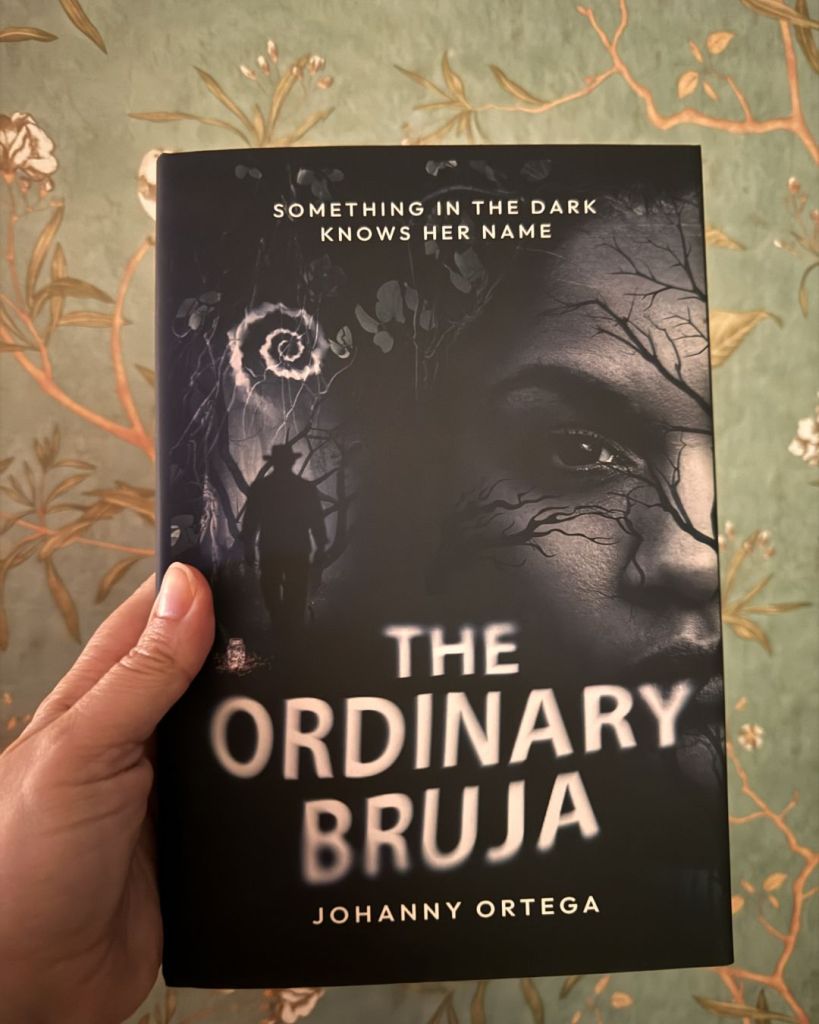

Monster Mall was my third author market in California, and I have a lot of thoughts.
By far, my best market has been The Gothic Market in Indio, California, where I completely sold out. Monster Mall now comes in at a very respectable second. I didn’t sell out this time, but I sold enough books that I now need to replenish my stock before my next market.
I’ll take that as a win.
And because I am me (and apparently incapable of simply experiencing something without dissecting it afterward), I’ve been looking at all three markets as one big experiment.
What worked? What didn’t? What made people stop? What actually converted into sales? What looked cute but didn’t necessarily move books? And, most importantly, what makes an author market financially worthwhile when you are an indie author paying for every single book sitting on that table?
I’m still learning, but my biggest takeaway so far is this: successful author vending isn’t about signing up for every event you can find. It’s about putting your books in the right environment, controlling your costs, giving readers options, and actually connecting with the people standing in front of you.
Here’s what my little California author-market experiment has taught me so far.
Lesson One: Apply to Markets Where Your Book Can Thrive
When I first moved to California in December and finally settled enough to pick my author business back up, I realized I had already missed many of the application deadlines for traditional book festivals and literary events happening in 2026.
So I made a decision.
If I couldn’t find bookish events, I was going to follow the vibes.
Almost every market I’ve applied to is either adjacent to or completely immersed in horror, gothic culture, witches, monsters, the paranormal, or spooky season.
Let’s just say my October is booked.
That was intentional.
The Ordinary Bruja is a gothic, witchy novel with Dominican magical realism and psychological horror. If I’m trying to sell that book in person, I want to put it in an environment where someone might walk past my table, see the cover, hear “Dominican gothic horror,” and immediately think, Ohhh, tell me more.
Could I take the book to a science-fiction convention and potentially find readers?
Sure.
But I would be going against the grain.
At a gothic or horror market, I’m already surrounded by people who like spooky things. My job becomes less about convincing someone that they enjoy the genre and more about convincing them that my book is the spooky book they should take home.
That’s what I mean when I say this way I am not going against the grain.
So now, one of the first questions I ask before applying to any event is simple:
Would my books naturally belong here?
If the answer is no, the vending opportunity needs to have something else incredibly compelling going for it.
Lesson Two: Know Your Financial Boundaries Before You Get Excited
Markets can get expensive fast.
There’s the vending fee. Gas. Food. Hotels if you travel overnight. Inventory. Displays. Packaging. Card-processing fees. And depending on the event, there may be parking, insurance, or other expenses hiding in the background.
So I gave myself boundaries.
My normal maximum vending fee is $250.
There are $40 markets out there, and there are markets asking vendors for hundreds and hundreds of dollars. Neither price automatically tells you whether an event will be successful.
I needed a number that made sense for my business.
I still have books to produce. I still have inventory to purchase. I still have The Forgotten Bruja coming down the pipeline. I cannot spend so much chasing markets that I suddenly don’t have the money to produce the next book.
Now, have I broken my own rule?
Of course I have.
My biggest vending-fee exception so far is NovelCon 2027 in Arizona on March 27, 2027. The vending fee was $350, and I was so excited because it was my first acceptance into a specifically bookish event that I paid it in installments.
So, if you see me at NovelCon, please come help a girl at least recoup that vending fee.
Please and thank you.
I also have a distance boundary.
California gas is expensive, and California traffic is its own type of psychological horror, so my normal maximum driving distance is about two and a half hours.
I have also broken that rule.
Grim Festival on October 17, 2026, is in Stockton, California.
Five. Hours. Away.
And this one happened because I made a mistake.
I applied while I was a passenger heading to another event. When I plugged the address into my phone, I didn’t realize I was already about two hours away from home.
So there I was thinking, Oh, this isn’t so bad.
Girl.
You’re already two hours from your house.
By the time I realized what I had done, I had been accepted. The vendor fee was great, and Grim Festival is basically the perfect environment for The Ordinary Bruja.
I couldn’t bring myself to say no.
So yes, I have boundaries.
Apparently, I also have footnotes.
But having those boundaries means the exceptions are actually exceptions, not how I run my business every weekend.
Lesson Three: Bring Options Without Losing Your Brand
At The Gothic Market, another author told me that when he first started vending, he brought books written by other authors so his table would have more options.
That can absolutely work.
It just isn’t the model I want for myself.
For me, that would mean learning someone else’s books well enough to pitch them with the same energy I give my own, managing inventory that doesn’t belong to me, splitting money, and navigating a business relationship around sales that are never guaranteed.
That sounds cumbersome for how I like to operate.
Instead, I create options within my own catalog.
I bring The Ordinary Bruja and Mrs. Franchy’s Evil Ring and the Six Months That Changed Everything.
They have overlapping spooky vibes but serve completely different readers.
Mrs. Franchy’s Evil Ring is for younger readers around ages nine through twelve and the adults buying books for them. The Ordinary Bruja serves older readers, including young adult, new adult, and adult audiences.
Then I have my book bundles.
Those include a signed copy of The Ordinary Bruja inside a book sleeve along with reader goodies like annotation notebooks, notation stickies, stickers, and different kinds of bookmarks.
At The Gothic Market, someone actually wanted the bundle with Mrs. Franchy’s Evil Ring instead, so I adjusted it for them and kept the bundle price the same.
Done.
That’s why I like having options.
I’m still selling to readers. I’m just serving different subgroups of readers from one cohesive table.
Lesson Four: Don’t Automatically Give Up on Your Hardest-to-Sell Book
I was advised that Mrs. Franchy’s Evil Ring would probably be difficult to sell at these markets and that I shouldn’t give valuable table space to a hard-to-sell title.
I decided not to listen.
And yes, it is still my hardest book to sell.
But something interesting keeps happening.
Sometimes the adult standing in front of my table is not the reader.
Their kid is.
Or their niece.
Their nephew.
Their grandchild.
Every copy of Mrs. Franchy’s Evil Ring I’ve sold at these markets has been purchased by an adult thinking about a child in their life.
That taught me something I actually learned while writing the book itself:
A children’s story has to appeal to the child, but the physical book also has to appeal to the adult making the purchasing decision.
So I changed my pitch depending on who is standing in front of me.
With one parent, I explained that another parent had read the book aloud with their child. I also told them that the book includes discussion material that can help trusted adults talk with young readers about some of the more difficult themes in the story.
That immediately became a selling point.
Parents like knowing there is something beneath the entertainment.
So, no. I’m not taking Mrs. Franchy off my table.
Partly because she does sell.
And partly because there is still a little kid inside me who desperately wanted a story like hers.
She gets table space.
Lesson Five: Consider Table Sharing If You Need More Variety
One option I haven’t tried yet is sharing a booth with another author.
Many market organizers allow booth sharing as long as everything is coordinated with them ahead of time. The authors can then split the vending fee and potentially attract a broader group of readers.
I think the best version of this would probably involve authors whose books complement each other without competing directly.
Maybe one romance author has sports romance while another writes small-town romance at a county fall festival.
Or one horror author has slashers while another specializes in body horror at a horror market.
You are serving the same broader readership while giving people different flavors.
But I also think this requires detailed coordination and a whole lot of maturity.
Who gets what percentage of the table?
Who brings the tablecloth?
Who handles setup?
What happens when one author sells twenty books, and the other sells two?
What happens when a customer stands between both sides for fifteen minutes?
No sale is guaranteed.
If you’re going to share a booth, everybody needs to understand that before the first table leg hits the ground.
Lesson Six: Make Your Table Look Like Your Books Feel
You do not need a thousand-dollar display.
You need atmosphere.
During the summer, I started finding Halloween decorations at good prices and buying pieces I could rotate from event to event.
A few decorations here.
A different arrangement there.
Some spooky elements around the books.
Suddenly the table has a whole mood.
At every market so far, people have complimented my setup.
And I don’t think that’s separate from selling books.
The display helps tell people what kind of experience lives inside them.
If I write gothic, paranormal, witchy stories, I want someone to see my table from several feet away and already understand my vibe before I say one word.
My booth becomes part bookstore, part author brand, part tiny haunted house.
Exactly as intended.
Lesson Seven: Dress Like Part of the Experience
I like to stand out.
I am also a Leo, so please take that information however you need to.
I dress on theme with my author brand.
At Monster Mall, I bruja’d so hard somebody thought I was giving tarot readings.
I had to tell them, “I left my tarot cards at home.”
Meanwhile, almost everyone around me was wearing black, and I showed up in a 1950s-style monster-green dress covered in skulls.
I was giving Mami Monster.
And I loved it.
More importantly, the dress was comfortable enough that I could set up my booth, move around, stand for hours, talk to people, and work.
Because looking amazing and then being miserable six hours later isn’t helpful.
My clothing becomes part of the booth.
People remember it.
People compliment it.
Sometimes it starts conversations.
That matters when your biggest sales tool at an author market is you.
Lesson Eight: Make the Transaction Easy
One piece of market advice I listened to immediately was:
Drop the .99.
At an in-person event, saying, “That one is ten dollars,” is easier than dealing with $9.99.
So I rounded my event pricing.
It makes conversations easier.
It makes cash transactions easier.
It means I’m not dealing with pennies and random coins.
And most importantly, the customer immediately understands what something costs.
Markets already have a million little decisions happening simultaneously. Anything I can simplify, I simplify.
Lesson Nine: Learn to Read People and Then Actually Talk to Them
Authors love to people-watch.
At least I do.
I make up stories about strangers all the time.
That skill is surprisingly useful when you’re vending.
Making eye contact, saying hello, and watching tiny expressions tells me a lot about who might actually want to hear about my books.
Some people looked at my table and made a full fuchi face.
Okay.
Message received.
I let them keep walking.
But the people whose eyes widened?
The ones whose mouths made that little ooh shape?
The ones who slowed down?
Oh.
Now we’re talking.
That is when I say something like:
“Let me tell you about my bruja.”
And we go from there.
Some people buy.
Some people decide they don’t want to spend $15, so I explain that I have another edition available for $10, and sometimes that gets me to a yes.
Some people are genuinely interested but aren’t ready to purchase, so I give them my business card and invite them to find me online.
The important thing is that I’m not throwing a pitch at every human body that passes my table.
I’m connecting with the people already giving me signs that something caught their attention.
Then I figure out what they need in order to make a decision.
I genuinely find that thrilling.
Lesson Ten: Go Into the Market With a Number
My first market goal was incredibly simple:
Sell one book.
That was it.
I sold four.
And that first event taught me that I needed a real number going forward.
Now, before I vend, I know approximately what I need to sell.
I know how many bundles would cover my fee.
I know what combination of books gets me closer to breaking even.
I carry that number in my head throughout the day.
And every sale becomes part of my countdown.
My husband already knows what happens when I get close.
At Monster Mall, he asked me:
“You’re going to do the dance?”
Yes.
Yes, I am.
Because once I get close to my number, the little happy seller dance comes out.
I haven’t hit my goal at every single market. That’s important to say because markets aren’t guaranteed money.
But having a number gives me something objective to measure.
Instead of walking away saying, “I think that went well,” I can ask:
Did I break even?
How close did I get?
What sold?
What didn’t?
What should I bring more of next time?
That turns vending into business data instead of vibes alone.
And listen, I love vibes.
But I also need numbers.
Bonus Lesson: Give People a Way to Find You After the Market
Every person who stops at your table may not buy something that day.
That doesn’t mean the interaction has no value.
My business cards have a QR code that leads people back to my website.
At my second event, I actually ran out.
People asked for my information afterward, and I had to start writing it on scraps of paper.
Never again.
Now I bring more than I think I’ll need.
I have them available on the table.
I put them inside purchased books.
I want someone who meets me today to be able to find me six months from now.
And those connections have already paid off in ways that don’t always look like immediate book sales.
I’ve connected with other markets.
I’ve received opportunities.
One connection even led to a book reading I’m doing on October 10.
All because somebody knew how to find me afterward.
A business card didn’t create that opportunity by itself.
But it created the bridge.
And Finally: Have Some Damn Fun
I know everybody says this.
Have fun.
Be approachable.
Enjoy yourself.
But I’m serious.
At Monster Mall, one woman stopped at my table and seemed hesitant to touch one of my books.
So I told her:
“Go ahead. Touch it. I promise it’s not hexed.”
She started laughing.
Then she asked why my display copies were inside Ziploc bags.
It had been raining on and off, so I had weatherproofed the books.
I explained that I was protecting them from the rain.
She stared at me for a second like she had just remembered that yes, it had literally been raining.
Then she said something along the lines of:
“Girl, I thought you had put something on those books.”
And that was it.
We started laughing and joking like we had known each other forever.
But something else happened.
People started approaching the table.
Because now there was laughter.
There was conversation.
There was energy.
People walking past were probably wondering:
What is happening over there?
And they came closer.
That taught me something I don’t think you can manufacture with the prettiest table display in the world.
People are attracted to people having a good time.
Yes, I’m there to sell books.
Yes, I have financial goals.
Yes, I’m watching my vending fee, inventory, gas costs, and profit margins.
But I’m also there because I wrote these weird, spooky, Dominican stories and now I get to stand in front of strangers and say:
Let me tell you about my bruja.
How freaking cool is that?
What Monster Mall Taught Me About Selling Books as an Indie Author
Three California markets in, I’m realizing that vending isn’t simply another place to sell books.
It’s research.
Every market teaches me something about my readers, my pricing, my branding, my pitches, my books, and even myself.
The Gothic Market taught me that my books can absolutely sell in person.
Monster Mall reinforced that putting them in the right environment matters.
And all three have taught me that success isn’t necessarily selling out every single time.
Sometimes success is breaking even.
Sometimes it’s finding the pitch that finally makes someone’s eyes light up.
Sometimes it’s discovering that the book somebody told you to leave at home actually belongs on your table.
Sometimes it’s handing somebody a business card that becomes an opportunity three months later.
And sometimes success is simply getting close enough to your sales goal that your husband looks over and asks:
“You’re going to do the dance?”
You bet your ass I am.

Leave a Reply