

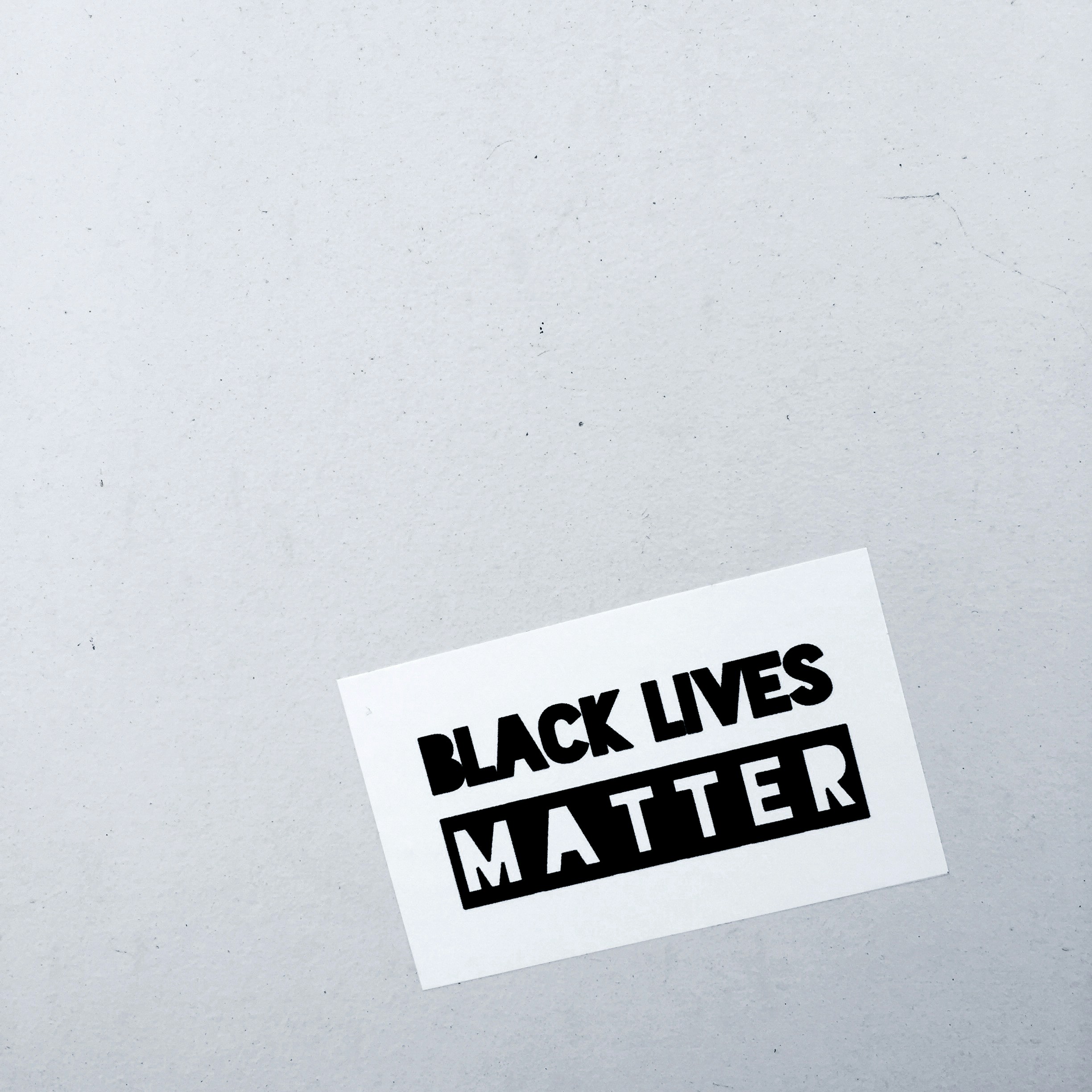
Stop lying to yourself, you do see color.
There’s an old saying that has prevailed for quite sometime when someone who is not black is confronted with racism: “I’m color-blind.”
The person that responds with this statement may also talk about POC friends, lovers, or maybe a spouse as proof for how they don’t see color and are somehow immune from racism. But I don’t believe the ‘color-blind’ lie. Not one bit.
I used to say ‘I’m color-blind’ when it came to race. When I said it, I ignored the fact that there are more shades in nature than a crayon box, and while failing to acknowledge our differences I also failed to see the inequalities that have persisted due to those differences.
I’m talking about one difference black and white. But I must specify that this is not an us vs them argument this is an us vs racism argument.
I know racism is learned, no one is born with it. I was born in the Dominican Republic where according to scholar Silvio Saillant 90% of the island is black. But what I learned in school in the DR, was a history that was completely white, and lifted the Spaniards as saviors while ignoring African ancestry and their voices.
I learned from that environment that my hair was prettier when it was straight. I looked better when my freckles wouldn’t show from sun exposure and that light skin is beautiful. In 2009 Sammy Sosa did an interview with Univision, looking completely different: white. This was very telling on how some Dominicans view blackness.
As a curious child who would sneak to listen to adults talk. I heard about my mom’s poor decision to marry my dad. One of the bad things about my dad they said was his dark complexion.
Nonetheless, I was loved and raised in a safe environment albeit around contradictory messaging that would confuse me a lot as a young adult.
When I migrated to the U.S. the public school system was similar to that in the D.R. when it came to history. The only difference was the U.S history was more British than Spaniard centered. Through the various grades and classes in middle and high school, I read a heavily curated historical account, written by authors that were unaffected, by what they were writing, and it showed. The accounts of slavery and the Civil Rights Movement were superficial, and only a blimp in a chapter.
Much like in the D.R where I was taught to ignore 90% of my brothers and sisters, I was taught a similar lesson in the U.S. Thus saying, ‘I am color blind’ when presented with racial issues was too easy for me, and every time I said it, I didn’t realize, I was ignoring the disproportionate burden society imposed on blacks.
Racism is an uncomfortable subject to discuss, more so, when one is part of the unaffected category. It’s uncomfortable because facing it honestly causes one to acknowledge their own shortcomings and privileges. Having to admit I was wrong was very uncomfortable, but necessary.
What I learned
In ’98, sixteen-year-old me, attended college, and this is when my real education began. I didn’t learn much from the classes. In fact, if you look at my grades then, you will see an array of C’s and a few sprinkles of D’s. But while I was there, I joined the Third World Society, a group of students who uplift minority voices through writing, and other arts. From them, I learned the most. I learned that we are different, and is okay to be different. I also learned that what is not okay, is to judge someone based on those differences.
After my short stint in college, I continued to learn by digesting articles, essays, poems, documentaries, movies, and books that dealt with the black experience from black creators. These are just a few:
I read Michelle Obama’s memoir Becoming and learned about the white exodus in Suburban Chicago and how white families left the neighborhoods they once inhabited after an influx of black families came to live there. As a result of this exodus funding for schools and other local entities decreased, thus turning those neighborhoods into what they are today. None of the history classes I took taught me about this kind of racism, that is ingrained in our laws and politics.
When I watched the Malcolm X documentary, Who Killed Malcolm X? I learned that what blacks fought for back then, was still happening today, namely police brutality. I cried when I watched because I was angry that injustice has prevailed for this long. It was infuriating to watch the FBI surveil this man because he dared to be intelligent and speak eloquently against the inhumane treatment of black people, and that somehow was a threat.
When I read Octavia Butler Kindred, I noted the genius of this author to create a fictional story backed by historical truths. After I read this book, I researched human capital and slavery and found out that just like the fictional account in her book, slave masters kept black women to force them to have children, so they may sell those children for profit. These slave masters would also rape these women. But I didn’t learn that in school.
The catalyst
Looking back I see when I started to unlearn what was passed down to me, and learn the truth. I can pinpoint this moment when I became part of a diverse group of people and learned to listen to them. That was the catalyst for me. If I would have accepted the teachings from my environment, family, and other friends who shared my point of view, I would have never learned what I know now — that ‘color-blind’ in response to racism is disingenuous and lazy.
I see color. We see color.
When I accepted that, I was able to dig deeper and acknowledge the inequalities that still exist today for our black brothers and sisters. The Civil Rights Movement didn’t die in 1963 with the Civil Rights Act. It is still going on today, and it will continue to be this way till we accept that there is a burden placed on black America that should have never been there and use our privilege to lift their voices and make it the norm to ostracize racist behavior. Because if our black brothers and sisters are not okay, we are not okay.
When you catch yourself wanting to reply with ‘no, I’m color-blind,’ stop. Instead, seek to learn what it takes to live while black in America from those that live it every day. Sit in their pain for just a bit, stand with them in solidarity, and when one of your friends wants to say a racial joke or a family member propagates a stereotype, stop them and teach them what you know. Unless we unlearn and then re-learn and teach others, we will continue to cycle ignorance and apathy. I know you see color, now look deeper and feel their pain.

Leave a Reply