

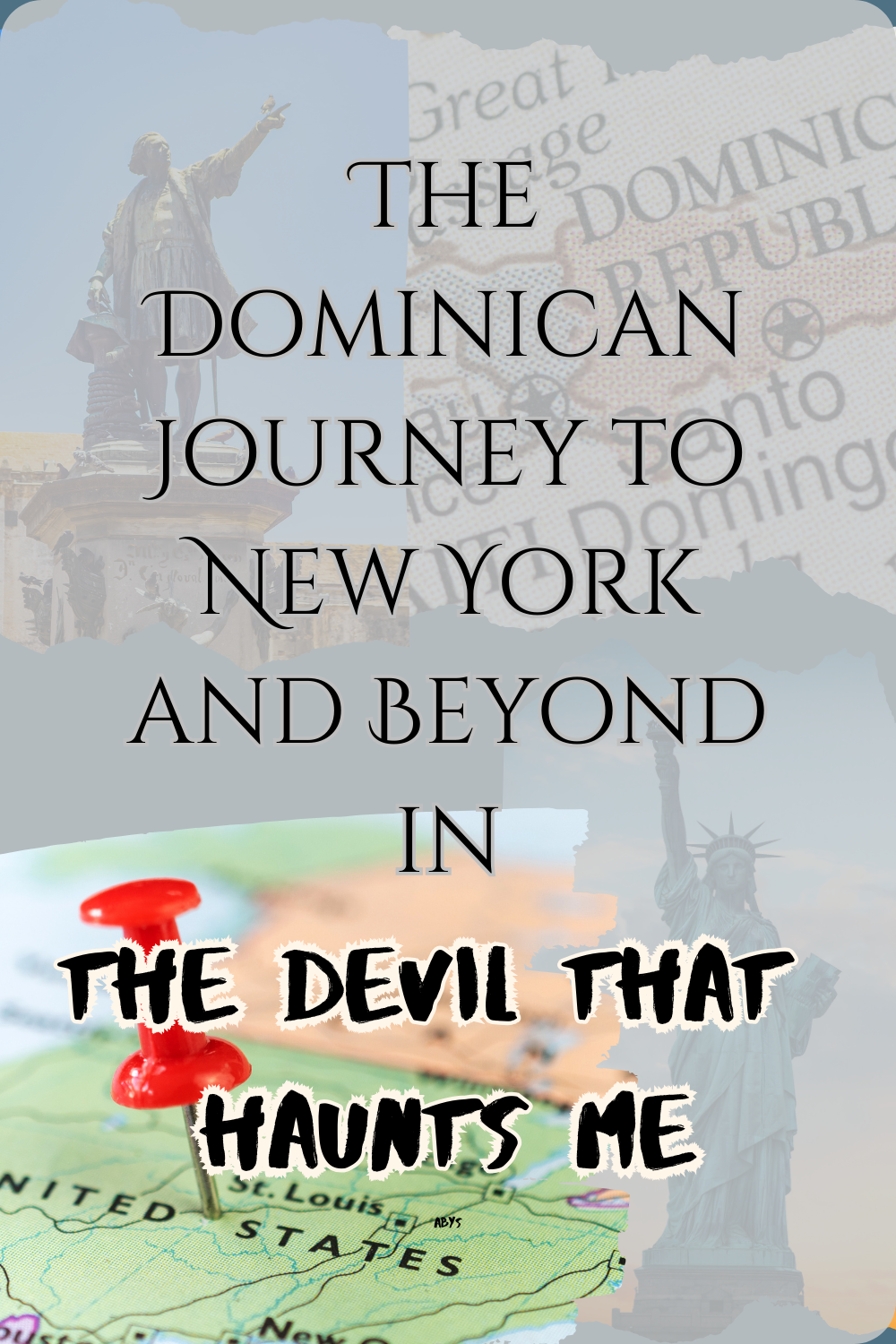
The story of the Dominican community is an essential part of the diverse range of immigrant tales that form the fabric of the United States. Like many other immigrants, Dominicans also come to America with the hope of a better life, chasing their dreams, and fighting against social and economic barriers. New York City, with its enormous opportunities, has always been a popular destination for Dominican immigrants. However, my own journey and that of the characters in my book, “The Devil That Haunts Me,” reflects the unpredictable and complex nature of the immigrant experience, extending beyond the familiar streets of New York and into the rich cultural history of Massachusetts.
The Pull of New York: Dreams and Realities
The allure of New York for Dominican immigrants is multifaceted. Historically, the city has been a magnet for those seeking economic opportunities unavailable in the Dominican Republic. From the mid-20th century onwards, waves of Dominicans landed in New York, drawn by the promise of jobs, a better education, and the chance to forge a new life. The city’s vibrant Dominican enclaves, such as Washington Heights, became symbols of hope and resilience, where the familiar rhythms of Dominican culture — from merengue and bachata to the savory aromas of plátanos and arroz con pollo — filled the streets.

Immigration Throughout The Years
Dominican immigration to the United States significantly increased starting from the 1960s, a period marked by political upheaval in the Dominican Republic. The death of dictator Rafael Leonidas Trujillo in 1962 and the subsequent Dominican civil war in 1965 led to a wave of immigration to the U.S., primarily for political reasons.
 The size of the Dominican community in the U.S. skyrocketed during the 1970s and 1980s, with New York State being a primary destination, particularly the neighborhood of Washington Heights in New York City. By 1990, there were over half a million Dominicans in the United States, with a significant percentage residing in New York. Today, Dominican immigrants and their descendants comprise the fifth-largest Hispanic group in the United States, with roughly 1.9 million people of Dominican origin or ancestry.
Nearly all Dominican immigrants who obtain lawful permanent residence in the U.S. do so through family reunification channels. This method of residency which I am familiar with, is what I use in “The Devil That Haunts Me” to share a period of time when Julitza was without her mother and vulnerable and how that separation caused a rupture in their relationship. Compared to the total immigrant population, a greater share of Dominicans are naturalized U.S. citizens, despite being more likely to live in poverty have limited English proficiency, and are less likely to have a college degree.
Massachusetts: A New Chapter in the Immigrant Tale
While New York stands as the iconic entry point for many in the Dominican diaspora, my own journey — and the journey of the characters in my upcoming book, “The Devil That Haunts Me” — took an unexpected turn to Massachusetts. It’s almost comical, in a way, how life imitates art (or is it the other way around?). After settling in New York, I found myself in Massachusetts, a state with a rich history of immigrant communities finding their footing and making their mark.
“The Devil That Haunts Me” doesn’t just tell a story set in Massachusetts; it echoes the broader narrative of Dominican migration — the search for belonging, the struggle with identity, and the haunting questions of home and place. While the setting may differ, the themes are universally resonant with the immigrant experience. With its blend of urban centers and quaint towns, Massachusetts offered a backdrop where my characters could confront their demons just as I navigated my own.
The Rite of Dominican US Initiation
Living in New York first before moving to Massachusetts felt like a rite of passage, a common trajectory for many Dominicans in the US. This journey from New York to Massachusetts encapsulates a broader story of adaptation and resilience. It reflects the ongoing search for a place that feels like home, where dreams can take root and flourish. In many ways, “The Devil That Haunts Me” is a tribute to this journey — a recognition of the struggles, the joys, and the indomitable spirit of those who traverse lands in search of something more.
As I share this story with you, I invite readers to reflect on the themes of immigration, identity, and belonging. “The Devil That Haunts Me” may be a tale woven from my imagination. Still, its essence is deeply rooted in the real-life narratives of countless Dominicans and other immigrants who have made similar journeys. Through the lens of fiction, we can explore the depths of these experiences, understanding and empathizing with the myriad ways people navigate their new lives in the US.
In sharing this story, I also share a piece of myself — a testament to the journey that has shaped me, from the vibrant streets of New York to the historic landscapes of Massachusetts. It’s a reminder that while our paths may diverge, the quest for a place to call home unites us all.
As you turn the pages of “The Devil That Haunts Me,” please remember the spirits of those who have journeyed before us. They have carved out spaces for themselves in the vast mosaic of America. I also want to extend a special message to my fellow Dominicans and immigrants. Your stories are the heartbeat of this nation, echoing the resilience and hope that define us.

Leave a Reply