

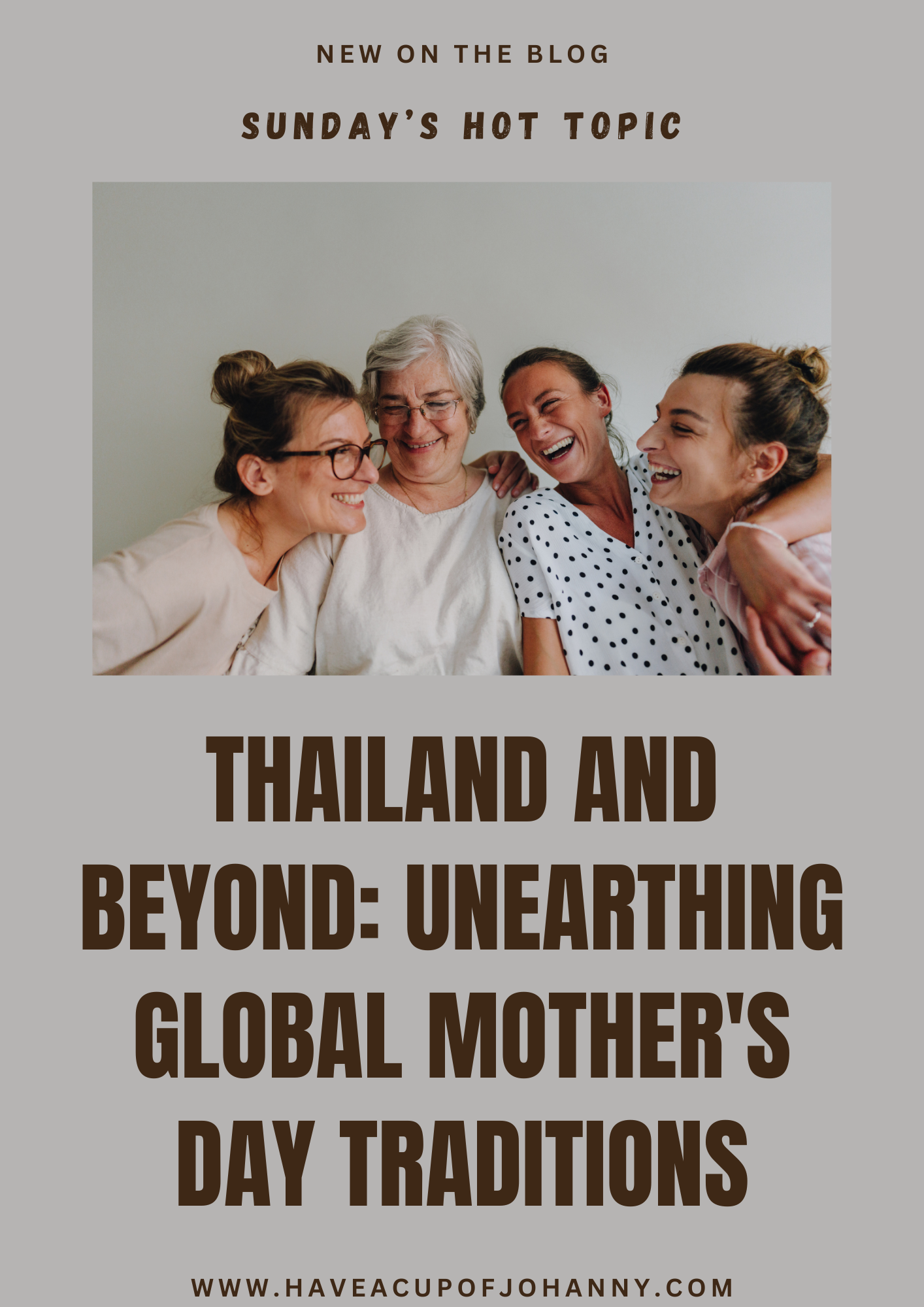
Mother’s Day—a heartwarming celebration honoring motherhood, maternal bonds, and mothers’ influence in society—has evolved significantly from its heartfelt origins. Today, as we approach this special day, it’s essential to peel back the layers of commercial gloss that have tinted our perceptions and look deeper into the diverse cultural practices that define this holiday around the globe.
Unraveling The Global Mosaic of Mother’s Day Traditions
Across different continents and oceans, Mother’s Day isn’t just about flowers and greeting cards. It’s deeply ingrained in the culture and history of each place, celebrated with unique traditions that resonate with local customs and historical backgrounds.
- Thailand: Here, Mother’s Day is celebrated in August on the birthday of Queen Sirikit, who is considered the mother of all Thai people. This day is marked with parades and fireworks, emphasizing the nation’s reverence for its maternal figure.
- Ethiopia: In Ethiopia, Mother’s Day takes place over several days as part of the Antrosht festival, dedicated to moms. When the rainy season ends, families come together for a celebration that includes large meals and stories celebrating motherhood, symbolizing a time of joy and fertility.
- Mexico: In Mexico, Mother’s Day, or ‘Día de la Madre,’ is celebrated with fervor on May 10th. Families often start the day with a serenade of “Las Mañanitas” to the mother, followed by mass and a family feast, making it a deeply personal and communal day of appreciation.
- Dominican Republic: In the Dominican Republic, Mother’s Day is celebrated on the last Sunday of May. It’s a vibrant, all-day affair filled with music, dancing, and large family gatherings. Families often gather for large meals, and it is common for children and fathers to take on household duties for the day to give mothers a break. Gifts, flowers, and cards are commonly given to express gratitude and love.
- Haiti: Haitians celebrate Mother’s Day on the last Sunday of May as well. It’s a day filled with church services followed by festivals and social gatherings. The celebration in Haiti is quite heartfelt, with children often performing songs and poems as a tribute to their mothers. Families also enjoy a special meal together. The day is marked by a deep appreciation for the sacrifices and love of Haitian mothers.
Rediscovering the Roots
The origins of Mother’s Day in the United States have a poignant beginning, far removed from today’s commercial trappings. Ann Reeves Jarvis of West Virginia created Mother’s Day Work Clubs in the 1850s to teach local women how to properly care for their children. The intention was profoundly social—aimed at lowering infant mortality by fighting disease and curbing milk contamination. The official Mother’s Day holiday arose in the 1900s as a result of her daughter, Anna Jarvis’s, efforts to honor her late mother by continuing the work she started. However, Anna became disillusioned by how the holiday had been commercialized by the 1920s.
Today, as we celebrate, it’s worth remembering Anna’s original vision—appreciating mothers for their endless contributions to our lives, beyond any materialistic acknowledgment. Let’s take a step back from the brunches and bouquets and think about meaningful ways to celebrate the women who raised us, focusing on personal gratitude and heartfelt appreciation.
Embracing Motherhood in All Forms
As we advocate for diversity and inclusivity in all realms of life, Mother’s Day is a poignant time to acknowledge all the forms of motherhood in our communities. From biological mothers to adoptive and foster ones, to aunts, grandmothers, older sisters, and even friends who’ve taken on that nurturing role—each has a story worth celebrating.
In Mrs. Franchy’s Evil Ring, the complexities of the stepmother role are explored through the eyes of nine-year-old Isla Delgado. After a distressing experience with her first stepmother, Isla is initially wary and distrustful of her second one. The story delves into the emotional landscape of a blended family, showcasing how Isla, with time, understanding, and the empathetic efforts of her family, gradually opens up to the possibility of trusting and accepting her new stepmother. This narrative arc not only enriches the portrayal of stepmothers beyond typical stereotypes but also emphasizes the diverse forms of maternal love and the broad spectrum of motherhood celebrated on Mother’s Day.
This Mother’s Day, let’s strip back the commercial veil and reconnect with the essence of what it means to celebrate motherhood. Let’s make it a day filled with personal stories, cultural richness, and genuine love—a celebration truly fit for the queens in our lives.

Leave a Reply