


I’ve seen it too many times to count.
The panic in someone’s eyes when they make a mistake.
The awkward laugh they give, trying to save face.
The long-winded explanation to justify why something didn’t go as planned.
And I get it. Failure is scary. Especially in a world that treats failure like proof of incompetence, laziness, or weakness. I’ve watched people contort themselves, emotionally and mentally, just to avoid it.
But I’m here to say something that may sound odd if you’ve never heard it before:
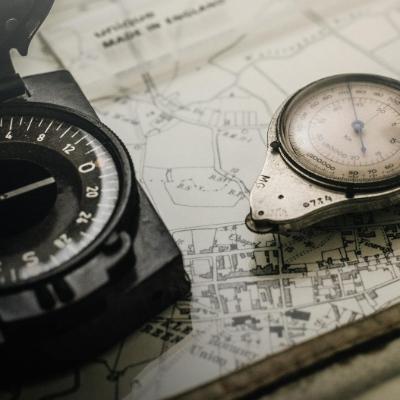
Failure is not the enemy. It’s the map.
Honestly, I wish more people would talk about failure the way we talk about success. With pride. With openness. With curiosity.
Because if we really let ourselves look at failure closely—not as shame, not as a dead-end, but as a re-route—it becomes something else entirely. It becomes part of the process. A sign that you’re trying. A signal that you’re learning.
I’ve been very open about my own failures. And it still surprises me how shocked some people are when I talk about them. I’ll say, “Yeah, that didn’t work out,” or “I messed that up,” or “I thought I knew what I was doing, but turns out—nope.” And their eyes go wide, like I’ve just admitted to a crime.
But to me, failure has never been proof that I’m not good enough.
It’s proof that I’m moving.
And movement matters more than perfection.
Let me give you a real-life example that still makes me laugh a little.
I was 21 years old, a recent single mom, and I was talking to my stepmom about how my son’s father had left us. Straight-up ghosted. Poof—gone. And while I’m sharing this, trying to process it out loud, she suddenly hushes me and says, “Make sure you don’t say that to anyone else.”
I blinked.
“Wait, what?” I asked, completely caught off guard.
She leaned in and said, “People might use that against you. They’ll think something is wrong with you.”
The audacity!
At the time, I didn’t quite know how flawed that mentality was, but I knew deep in my bones I didn’t agree with it. I remember thinking, Why should I be ashamed of that? I didn’t do anything wrong. He ghosted. That’s on him.
And thank God I didn’t listen to her. Whenever someone asked, I told them the truth. No sugarcoating, no shame. Because even then, at 21, I knew something vital: the truth isn’t something to hide when it makes others uncomfortable.
Also, let’s be honest—if someone hears that my son’s father ghosted and their first thought is “she must be the problem,” then that says a lot more about them than it does about me.
Failure, heartbreak, setbacks—they’re not red flags about who we are. They’re chapters. And the sooner we accept that, the easier it becomes to grow from them.
I wish we could normalize failure—not just in theory, but in practice.
I wish more people saw failure as an opportunity to get curious.
That’s what changed the game for me. When I started seeing my failures as puzzles rather than punishments, something unlocked in my brain. Instead of spiraling into self-doubt or shame, I’d ask:
- Why didn’t this work?
- What was I missing?
- What was the lesson tucked inside this moment?
And that process—of slowing down, looking at the pieces, and putting them back together—became fascinating. It was like detective work, but the case I was solving was me.
There’s something deeply entertaining about it, too. Yes, you read that right. I’ve found failure kind of fun. Not the sting of it, of course. That part never feels good. But the reflection that comes afterward? The “a-ha” moments? That part lights me up.
Because every time I fail and examine it, I learn something about myself—how I react under pressure, what assumptions I make, what blind spots I’ve been ignoring. I learn about other people too—how they communicate, how they show support (or don’t), what they value. All of that is information I didn’t have before. And now I do.
That’s progress.
We treat progress like it’s only linear. Like it should look like a staircase climbing upward with no hiccups or detours. But real progress looks like scribbles. It’s messy. It’s unpredictable. And yes—it includes failure.
But that doesn’t mean you’re not moving.
It means you’re living.
So here’s what I want you to know:
Failing isn’t falling short. It’s falling forward.
It’s data. It’s direction. It’s a detour with a lesson in its pocket.
And you don’t have to be afraid of it.
You don’t need to pretend it didn’t happen.
You don’t need to explain it away or cover it up.
You can own it. Look it in the eye. Ask it questions.
And then? You keep going—with more wisdom than you had before.
That’s what I try to do now. Whether it’s a personal moment or something in my creative life, like launching The Ordinary Bruja, I expect to trip here and there. I expect to hit walls. And when I do, I don’t ask “What’s wrong with me?” I ask, “What can I learn from this?”
And I learn.
And I grow.
And that’s what success is built on.

Leave a Reply