

I Really Don’t
The audacity! Stop being lazy, and work has become the comment heard worldwide. And with so much tragedy and injustices currently going on, that comment is as tone-deaf and out of touch as tone-deaf and out-of-touch comments can get. It’s ridiculous.
To say that comment stayed with me is putting it mildly. It tattooed itself right on the hypodermis, where I can’t scrub it off. Furthermore, watching The Dominican Dream on Amazon Prime brought forth resentment I didn’t know I still had about that comment. Obviously, I hadn’t exorcised every emotion still lingering in my body about this tone-deaf comment. The documentary helped me get it all out. The Dominican Dream is a documentary published in 2019 that has to do with a then-rising Dominican basketball star Felipe Lopez.
You see, Felipe Lopez quickly rose to fame in the ’80s and ’90s after immigrating from the Dominican Republic, and joining the local and high school basketball club. He became a star, a rarity. Usually, Dominicans in sports fill baseball positions. This is as much as I can say about this. I don’t consume sports in a manner where I can eloquently talk about history, various positions, and what is considered good or bad. So seeing a Dominican holding it down in basketball became a phenomenon.
Now while I don’t know much about sports, so this is as much as I can say about the sport side of Felipe’s popularity, I am what you call a human connoisseur. I can speak on that all day, every day, twice on Sundays. You are lucky because today is Sunday.
Sin Pelos en la Lengua, Here We Go
Now while I am no athlete, I drew a lot of parallels between Felipe’s immigrant story and mine. I was separated from my parents but more protracted than three years like him. And during that separation (which occurred during a critical time in a child learning to trust their parents), I came to recognize my grandma — Mamá as my mother. Felipe had something similar. A lady in his neighborhood took care of him and ensured he was fed and safe, and he still considers that lady his Second Mom.
When he immigrated to the States, he came to JFK. Same here. He didn’t speak a lick of English. Same here. But for Felipe learning a new language was difficult. Not so much for me. However, I came to the US at an earlier age, making it easier to learn. Nevertheless, like Felipe, I was mocked at school because of my accent and my incomprehensible way of translating Spanish in my head to English aloud. Like Felipe, I eventually learned it well to talk back because Mamá raised no fool.
Past the halfway mark Failure Looms
Nevertheless, past the halfway mark of the documentary, my eyes teared up. I knew the joy that accompanied the first half would have to come crashing down with sadness and disappointment because that’s how stories are made, even real-life ones. You see, our lives are nothing but a heartbeat on an electrocardiogram, and it’s only flat when we are dead. As long as we are alive, we will have ups and downs.
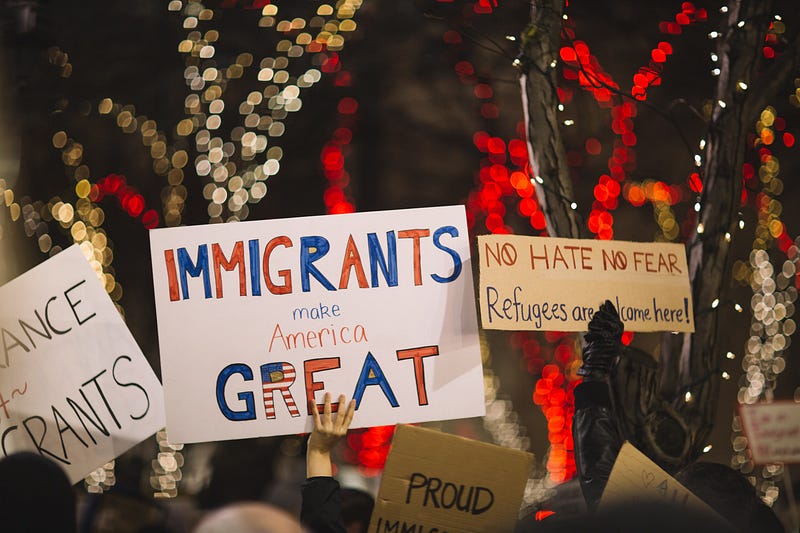
Sure enough, that moment came when the pressure of representing a whole culture, country, and family became too much to dunk on the haters. And while I could see it coming a mile away, it still stung to watch. But that’s the life of an immigrant. That’s my life. That’s the life of many others who are called outside their names, told time and time again to go back where they came from, and yes, are told just to work harder so they can reach the American Dream.
Yet no one acknowledges in that sentence filled with unsolicited advice and sometimes racial slurs, the automatic disadvantages that put immigrants to start the race of the American Dream way behind their Caucasian counterparts. I can think of two critical ones off the top of my head. An immigrant faces economic and language disadvantages when starting life anew in a new place.
Just think about that.
I’ll wait…
But wait, that’s not all. There’s more:
New norms
New currency
New culture
New foods
New climate
Think About it, Just Think
An immigrant does not migrate for shits and giggles. They migrate because their family and themselves need to survive. Not thrive. Survive. And after they find themselves surviving, then they go after thriving. But for some immigrants, all they will ever reach is surviving, and the sad part is that for them, that is more than enough because, in their home countries, they couldn’t achieve that.
Just think about that…
I’ll wait…
So, of course, with the odds stacked against Felipe, he didn’t reach the “American Dream.’’ He failed. He didn’t join the NBA right out of High School, became the best of the best, and amassed an absurd amount of wealth. Why would he? His mom came to the US so her children could attain an education. They knew that professional sports are a gamble, and one injury can end a career. At the same time, education can set one up for a long time.
This is so similar to my upbringing in the Dominican Republic. Education, whether vocational training, college, or hands-on, was non-negotiable. I knew growing up that there wouldn’t be a choice for me whether I sought an education. My grandma took that choice off the table for my sister and me. We knew we were going to college. The problem was ‘the how.’
While I knew I had to go, I didn’t know the first thing about applying for scholarships, college tours, none of it. I was not plugged into the right clubs to find out. I was untethered. I was Dominican full-time at home and would only punch into my American culture part-time job after getting on the bus to South High School. It felt very much like skipping rope.
Nevertheless, my part-time job was not enough to equip me with the know-how necessary to set myself up for a successful college career. Additionally, there wasn’t an adult mentor in my immediate circle to help me break the assimilation gap. This is why true diversity in the workplace is so important. At that point in my life, I needed an immigrant counselor that could cut through the bullshit and talk to me in a way I understood. So I started my adult life at a disadvantage that working hard would not have breached. To top it all off, I even became a single mom at twenty. Essentially, I checked every block on the bias checklist for immigrants from the hood.
But by luck (because I didn’t plan any of it) and Mamá, who watches over me from above, I did. Albeit in an unorthodox way. Felipe did too. But I don’t think his achievement was by luck like me. I think he followed his heart and became realistic about what success was for him. He steered himself in that direction until he reached The Dominican Dream.
About Johanny ‘Joa’ Ortega
Johanny is an ESL author, podcaster, and sometimes sensitivity/authenticity reader. She’s currently in the final editing stages for her upcoming middle-grade novel, Mrs. Franchy’s Evil Ring and the Six Months that Changed Everything.

Leave a Reply