

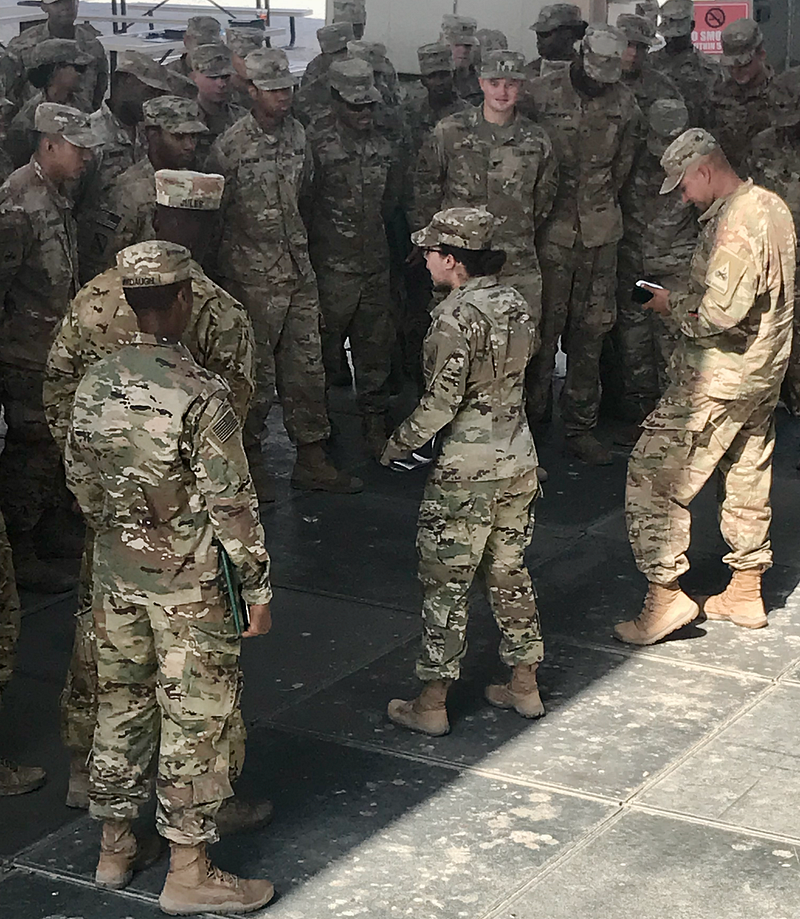

Sometimes making unpopular choices can be challenging. This is especially true if it goes against everything your mind and body want to do. The Army taught me how to embrace this, though. When I was deployed as a Tech Supply NCOIC, my job was demanding but rewarding. As an SSA leader, the responsibility of leading people to accomplish a sometimes impossible mission became very real for me. Making unpopular decisions isn’t always easy because you know that not everyone will agree with them or like them — but sometimes they’re necessary!
Being a logistician in the Army can feel lonely, and that loneliness can be demoralizing. As a Tech Supply NCOIC supporting an aviation unit for eight years, it felt like it was my shop against the world most of the time. Within the organization, we were the low-density population and, as such, were often misrepresented and misunderstood. I found myself fighting against this while at the same time keeping my Soldiers working and producing, even though I was not too fond of the unit or people there.
So, why did I do that?
I could have easily given the bare minimum and passed that down to my Soldiers. That would have been the easy way out and the most comfortable. But I didn’t. Instead, I pushed the shop to give their best even when others who didn’t understand us called us “Tech Surprise” or other degrading and less-than-funny names. I hated telling my Soldiers that we would not stop until we were done and that I would be inspecting the quality of their work because I honestly disliked most of the people in that unit. Personally, some of them did not deserve the sweat the shop put into the processes every day. Nevertheless, that’s what I did because while the unit didn’t merit it, my Soldiers did.
They deserve to have actions representative of the type of Soldiers and human beings they are. They deserve to understand what it looks like to give it their very best and test the limits of their resiliency. They deserve that knowledge so that, in turn, they can pass it down to others once they fill my shoes. Just like I hated the environment I was in, I’m sure some of my Soldiers hated me for pushing them. If I were in their shoes, I would be disgruntled, at the very least.
It was tough looking them in the eye and telling them the must-dos. I would cringe inwardly every time. But just like I pushed them, I pushed myself. Until the next time I had to make an unpopular choice, it was easier. It wasn’t that the rock in my stomach went away or that they liked me more when I made a decision they agreed with. It was that I understood it came with the job of leading.
Moving to the SSA
IT WAS LESS LONELY when I moved to the SSA (The Army’s version of a warehouse). The SSA is filled with logisticians. There, I didn’t feel like an island in the middle of the ocean. Nevertheless, making unpopular decisions didn’t magically disappear when I made that move. If anything, it was needed even more. Additionally, by the time I made the move, I had reconciled with being the bad gal when the situation merits it.
I led a team of people who were some of the most intelligent, dedicated, and driven Soldiers I have had the pleasure to work with. They knew more about what they did than I did, but I had to step in when the processes lacked effectiveness. Unfortunately, there are no shortcuts to accountability. For accountability to be accurate, one must visually see the person or thing. Word of mouth won’t do. Therefore, checks and balances in a team that had over thirty people became very unpopular.
“You don’t trust us?” was the question asked when I explained the checklist and how I would inspect the completion and quality of tasks completed. This is a tough question because if I say no, the person would get offended and automatically go on the defensive. If I say yes, the next question would be, then, “Why are you checking?” So my answer would be neither.
“I check because it is my job,” I would say instead of giving a yes or no answer. Which, in all honesty, it is. My job as a leader is to ensure that the tasks levied upon my subordinates are completed either to the standard or above it but never below it. Like I said before, there are no shortcuts to accountability. So I had to check.
But there were times when I didn’t even want to do it. Why?
Well, I was tired, feeling lazy, had a million other things to do or all of the above. Nevertheless, just like I levied unpopular decisions on my subordinates, I did the same to myself. So off from my chair, I went to check, verify, ask questions, and had Soldiers fix things they did incorrectly in worst-case scenarios.
I found that often times incorrectness stemmed from lack of knowledge or practice. Rarely did it stem from negligence or willful disobedience.
I know that if I didn’t make this unpopular decision, it would have come back to me anyway. So why not ensure the task was completed correctly? After all, better for me to check than be upset later on when my Soldiers failed or were unable to perform their duties because they never got checked upon. Nevertheless, with time, these unpopular decisions turned into scheduled tasks and became easier for all of us, to the point where they became second nature.
So my advice to leaders would be:
When you’re faced with a tough choice, first understand its underlying purpose. Know if it’s illegal or immoral because if it is, then that’s an easy no. If it’s not, then understand the pros and cons of both sides. Pick the choice that will meet the commander’s intent while working within the scope of the team’s strength.
And remember that just because an unpopular decision was made doesn’t mean every Soldier will hate you. Some may understand. Others may take a while to understand. Nevertheless, likeability should not be a factor in decision-making. What should be is the end state and talent within the organization. From experience, I’ve noticed that Soldiers understand and respect leaders who are fair and consistent, not those who shield them from reality.
And don’t get discouraged when you see Soldiers not following through with what you asked them to do. Just keep pushing until they complete their tasks to the standard you put forth in the guidance. Don’t discredit your leadership by saying one thing and doing another.

Leave a Reply