

About one in four Hispanics have heard of Latinx, but just three use it, according to a new study- Pew Research.
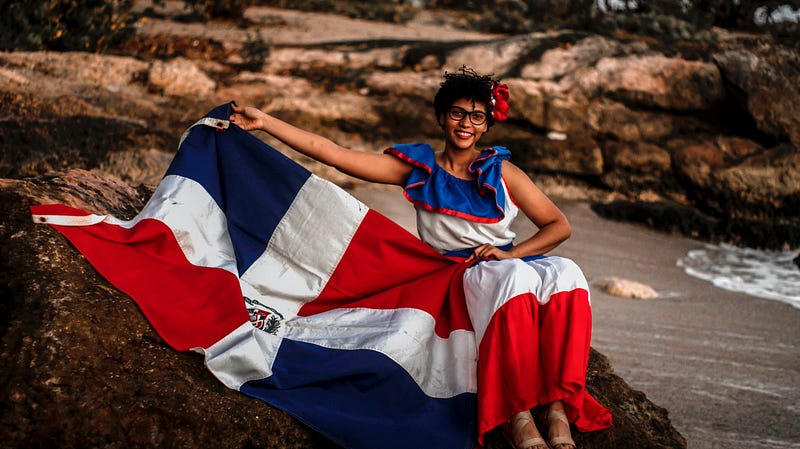
In the Dominican Republic, no one ever called me Hispanic, or Latina, or Latinx. I was just Joa. However, the Dominican Republic does differentiate between blacks and whites by calling blacks Haitianos even when they are born in the D.R. That should have been a red-racist flag that I should have noticed but didn’t. Or perhaps it was the push to shove Spanish ancestry on us at school while erasing Taino and African ancestry that should have been the second red flag. Nevertheless, I immigrated when I was nine, and long and behold, the U.S. categorized me as Hispanic. This may have been because of where I migrated to — the east coast — or the time. But none said Latina back then until now. And while I am all about using a name that allows for gender fluidity and decentralizes colonization, I’m a bit cautious of this term. Whenever I see it or hear it, it represents a person who looks like me, when I know that Latin American folks come in various skin tones.
“Few people realise that the Dominican Republic was home to the first black people in the Americas,” Lebawit Lily Girma from the BBC article ‘Santo Domingo: The city that kept slavery silent.’
It feels like, once again, much like what I experienced in school in the Dominican Republic, we are lifting the Eurocentric roots and burying all the others that make up the tree that is Latin America. It’s like a habit that won’t die.
In The Power of Habit by Charles Duhigg, he explains that to change a habit, one must replace it with another and do that consistently to become an automatic process. Therefore, to stop centralizing Eurocentric features as the representation for Latin America, we must change it by populating the media with black Latinx folks and do that consistently until it becomes a habit and is normalized. I can’t speak for every Latin American country. Still, it saddens me that for an island that is 90% black, the Dominican Republic continues to center white Dominicans when it comes to their representation. Nevertheless, I understand now that for some, it is the intoxication of power that manifests this.
Being tied to Spanish descent used to mean better treatment on the Island. It makes sense how much as a kid I would hear: “I’m Dominican, not black.” “We come from Spain.” “Our ancestors come from Spain,” and when pushed, someone would admit to being ‘mestizo’ as opposed to black. But no one spoke or taught about the transatlantic slave trade, the Taino genocide, the rape of Taino and African women, and the surnames taken by recently freed slaves that would either come from the master or the town they came from while I was there. Shoot, my last name from my father’s side is the name of a village in Spain. My father’s side of the family is black.
Nevertheless, while in the D.R., most run towards their white side to feel a sense of security, when we migrate to the U.S., our features, accent, and skin color set us apart immediately, and the categories we gave ourselves are null void. It’s funny and sad all at once how Dominicans cling to their proximity to whiteness to try to be the perfect white citizen as if it can erase how they look (which is what the U.S. uses to categorize race). This clinginess stems from that desperate need to survive when survival meant being close to whiteness. Yet, it is tough to break a habit.
Duhigg explains in his book that it took months for the subjects in his book to change a habit. Yet, time is not the only thing needed to change a habit, but the acceptance that a pattern needs to be changed. I had an Ex that told me I was in denial when I told him I’m just Dominican and that all that comes from the Dominican Republic are Dominicans. I didn’t know then what I know now. Correction: I chose not to know then what I know now. I was operating under the previous habit that my environment ingrained in me and maintained even after becoming an adult. It’s pervasive. Not going to lie, sometimes I catch myself operating within it and go back and try again.
Breaking a habit is a never-ending cycle of trying. But to embark on the steps needed to break it, I needed to get out of denial and accept that it was a counterproductive habit I needed to kill. Therefore, for the majority of the Latinx that actively erase blackness from the geographical representation, acceptance of the truth must occur first. Then the breakage of the habit of clinging to whiteness will come second.

Leave a Reply