

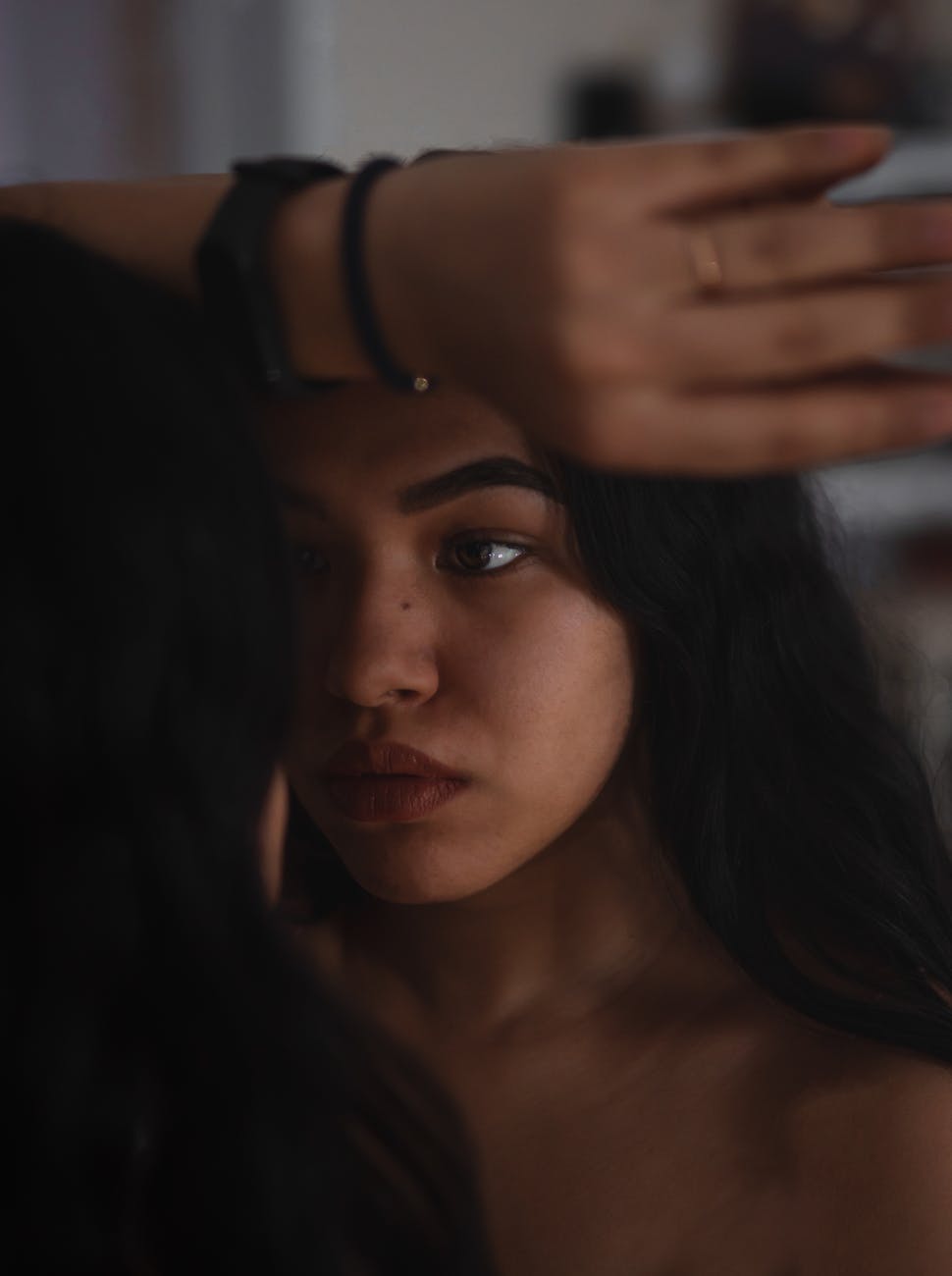
Marisol Espinal doesn’t think she’s magical.
She doesn’t think she’s brave.
She doesn’t think she’s worthy of being the hero in anyone’s story—not even her own.
And that’s exactly why I wanted to write her.
Because self-doubt doesn’t usually make the headlines. It doesn’t get the center stage in stories about witches and chosen ones. But it lives in so many of us. Quietly. Persistently. Whispering things we eventually start to believe.
I wanted a bruja who starts there.
Self-Doubt Comes from What’s Taught in Silence
I’ve said this before: some of the most damaging lessons aren’t taught through words. They’re taught through what’s unsaid. What’s modeled. What’s absorbed through observation.
For example, my mother never looked me in the eye and said, “Hate how you look.” But she used to stand in front of a mirror and criticize her skinny legs, calling them “chicken legs.” That same name—chicken legs—was later used for mine and my sister’s.
And just like that, a cycle begins. We inherit shame before we even know it has a name.
That’s the root of Marisol’s doubt, too. Not just what she’s told, but what she sees and feels. Josefina—her mother—never outright says, “You’re not enough.” But she keeps secrets. She avoids hard conversations. She tries to protect Marisol through stories and songs instead of telling her the truth about their ancestral magic. And for a girl like Marisol, who doesn’t know how to read between the lines? That felt like absence.
Preorder The Ordinary Bruja

The Ordinary Bruja: Book One of Las Cerradoras Series – Johanny Ortega
Marisol Espinal has spent her life trying to disappear from her family’s whispers of magic, from the shame of not belonging, from the truth she refuses to face. She’s always wanted to be someone else: confident, capable, extraordinary.
But when strange visions, flickering shadows, and warnings written in her mother’s hand begin to stalk her, Marisol is forced to confront her deepest fear: what if she isn’t extraordinary at all? What if she’s painfully ordinary?
Yet Hallowthorn Hill doesn’t call to just anyone. And the more Marisol resists, the stronger its pull becomes. The past she’s buried claws its way back, and something in the mist is watching—waiting for her to remember.
If Marisol cannot face the truth about who she is and where she comes from, the same darkness that destroyed her ancestors will claim her, too.
Somewhere in the shadows, something knows her name.
And it’s time for Marisol to learn why.
When You’re Not Told the Story, You Make One Up
Marisol learns to make sense of her world by piecing together fragments: a memory here, a tone of voice there, a story half-told. And the stories we’re not told? We fill those gaps with doubt.
That’s why, throughout The Ordinary Bruja, Marisol revisits memories—not to wallow, but to investigate. To understand what was missed. What was buried. What was meant with love but came out twisted by fear or silence.
She realizes Josefina was trying to teach her. Just not in the way she needed. And by the time she’s ready to hear it, the opportunity is gone.
The Shift from Parents to Peers
There’s a moment in childhood—usually subtle, almost invisible—when you stop modeling your parents and start modeling your peers.
For Marisol, that shift is marked by Las Tres Mojonas.
She goes from sitting in rapt attention as her mother sings about ancestral paths and mysterious hills… to tuning out, rolling her eyes, and trying to mimic the confidence and sleekness of the girls at school who seem to have it all figured out.
And Josefina, sensing she’s lost her daughter’s attention, stops pushing. She thinks, I’ll just fix it myself. I’ll do the hard part so she never has to know the danger.
But Josefina underestimated Salvador.
That choice—to protect Marisol by hiding the truth—becomes one of the deepest fractures in their family’s history. And we’ll explore that fully in La Segunda Cerradora, Josefina’s book. (Spoiler alert: yes, I’m publishing these out of order. The last Cerradora goes first, the first second, and the second last. Because chaos. And because that’s how legacy works—it loops before it lands.)
What Happens When You Stop Arguing With Doubt
What I love most about writing Marisol is that her journey isn’t neat. She doesn’t snap out of self-doubt with one magical moment. Her growth is clumsy and emotional. She falls back into old habits. She wants to believe—but doesn’t always succeed.
But slowly—so slowly—she stops trying to out-argue her doubt and starts listening beneath it.
Call it intuition.
Call it memory.
Call it ancestral magic.
Whatever name you give it, that voice was always there. She just couldn’t hear it under the noise.
You Can Doubt and Still Be Powerful
Marisol doesn’t become powerful because she becomes flawless.
She becomes powerful because she moves anyway.
She chooses to investigate, to feel, to ask questions. And even when she doesn’t fully believe in herself, she keeps showing up.
And that? That’s the heart of the story.
A Word for the Readers Who Feel Like Marisol
If you’ve ever heard your own mother talk down to herself—and absorbed that as gospel…
If you’ve ever drifted from the truth in favor of fitting in…
If you’ve ever doubted your value, even when others told you to shine…
This is your reminder: doubt is not disobedience.
And silence doesn’t mean the story isn’t there.
Marisol’s journey is about listening deeply—not just to her past, but to herself.
And yours can be too.

Leave a Reply