

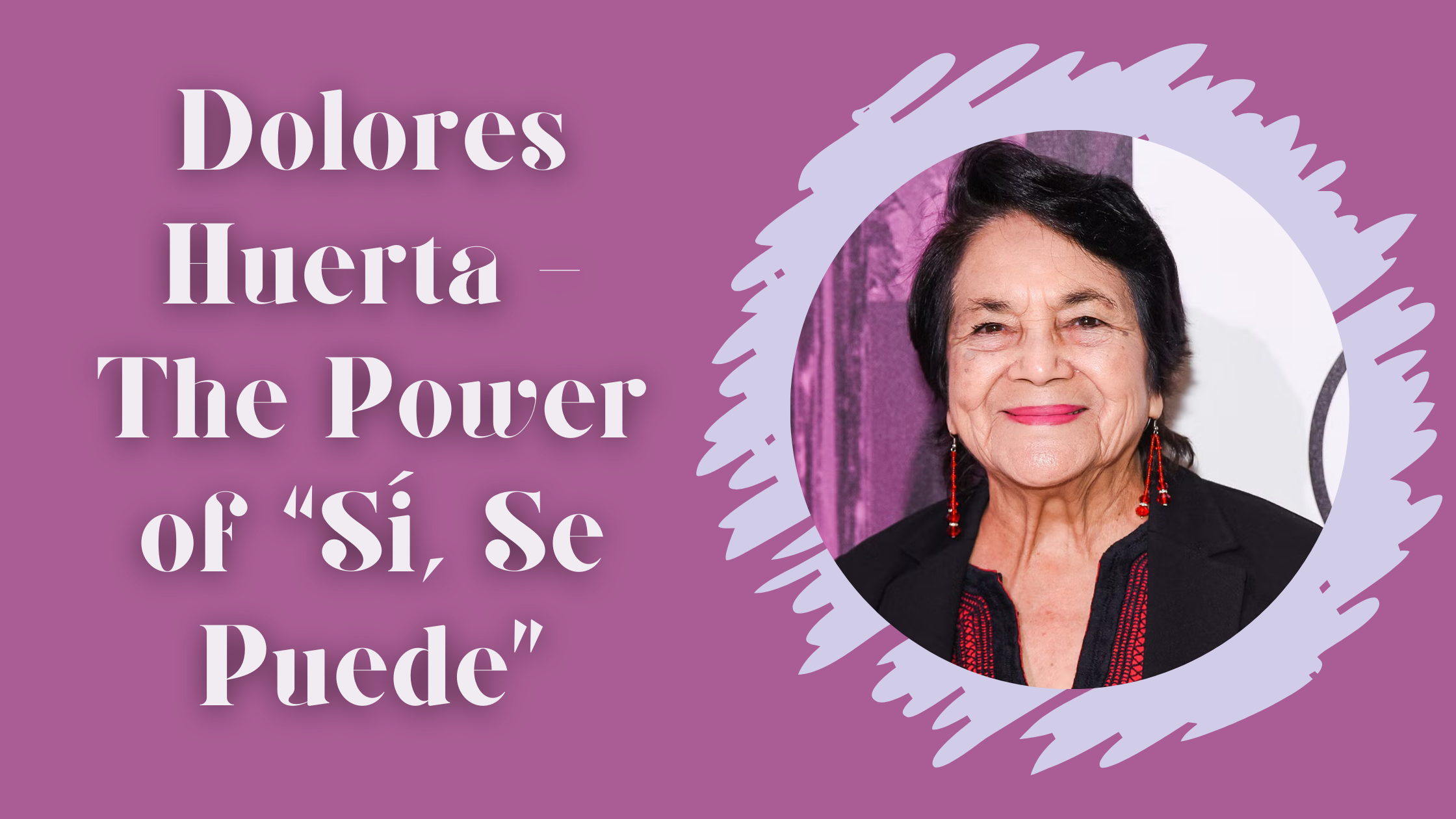
This November, as we approach the season of gratitude, let’s take a moment to honor one of the most influential figures in American civil rights history—Dolores Huerta. Known for her tireless advocacy in labor rights, gender equality, and immigrant justice, Huerta has dedicated her life to championing the rights of those often silenced. Her story is a powerful testament to resilience, unity, and the impact that one voice can have when it speaks up for others.
The Early Life and Rise of a Leader
Dolores Huerta was born on April 10, 1930, in Dawson, New Mexico. Raised primarily by her mother, Alicia, Huerta was instilled with a strong sense of compassion and justice early on. Alicia’s generosity—allowing farmworkers to stay at her hotel and helping those in need—left a profound impression on Dolores. This spirit of empathy and commitment to community service would become the foundation of Huerta’s life’s work.
In the 1950s, Huerta started working as a teacher in Stockton, California. However, seeing her students come to school hungry and without shoes moved her to action. She felt she could do more by advocating for systemic change, and soon, she became involved in community organizing. In 1962, Huerta co-founded the National Farm Workers Association (later the United Farm Workers, UFW) alongside César Chávez. Together, they worked tirelessly to improve the working conditions and wages of farmworkers, giving a voice to those who had been neglected for far too long.
Advocacy and “Sí, Se Puede”
One of Huerta’s most well-known contributions to the civil rights movement was coining the phrase “Sí, se puede,” which means “Yes, we can.” The phrase became a rallying cry during the farmworkers’ movement and has since become a symbol of hope and resilience for various social justice causes. Huerta’s work with the UFW led to the historic Delano grape strike and boycott, a five-year campaign that brought national attention to the exploitation of farmworkers and eventually led to better pay and working conditions.
Beyond labor rights, Huerta has consistently advocated for gender equality and social justice. As a mother of eleven, she understood firsthand the challenges that women, especially mothers, faced in activism. Despite the odds, Huerta broke barriers for women by taking on leadership roles that were often reserved for men. She empowered countless women to step into leadership and advocate for their rights, setting a precedent for women’s involvement in social justice movements.
The Lasting Impact of Huerta’s Work
Even today, at 93 years old, Dolores Huerta continues to advocate for justice through the Dolores Huerta Foundation. The foundation’s mission is to empower marginalized communities by providing educational resources, promoting civic engagement, and advocating for social, economic, and environmental justice. From fighting for better healthcare and education to ensuring economic justice for the most vulnerable, Huerta’s foundation carries on her legacy of service.
Huerta’s impact is especially relevant today. In a world where political divisions are deepening, her life’s work reminds us of the power of solidarity and collective action. Huerta’s legacy shows that meaningful change doesn’t come from standing on the sidelines but from being actively engaged, advocating for others, and standing up for equality. Her influence can be seen in modern movements like Black Lives Matter and immigrant rights campaigns, which echo her values of unity, justice, and resilience.
Why Huerta’s Legacy Matters Today
Huerta’s work is a reminder of how interconnected our struggles for justice are. Her advocacy work highlights the importance of allyship and solidarity across communities. For instance, her rallying cry, “Sí, se puede,” has been adopted by various movements fighting for justice, from environmental activism to gender equality. Her work with farmworkers has also sparked conversations around labor rights for domestic workers, food service employees, and other marginalized laborers who continue to face exploitation.
In today’s climate, Huerta’s life and work remind us to support one another, regardless of race, gender, or economic status. She’s a powerful example of what it means to advocate for justice without hesitation and to empower others to do the same. Her story underscores the idea that lasting change requires each of us to step up, use our voices, and fight for a more equitable world.
Call to Action
As we reflect on Dolores Huerta’s incredible legacy, let’s ask ourselves: How can we carry on her fight for justice? Whether it’s by supporting organizations that advocate for labor rights, volunteering in our communities, or simply educating ourselves on issues impacting marginalized groups, we can all contribute to building a more equitable world.
Let’s honor Dolores Huerta’s legacy by committing to take action—however big or small—toward a more just and compassionate society. Together, we can continue her work and ensure her message of “Sí, se puede” lives on for future generations.
For further research please look below:
- Michals, Debra. “Dolores Huerta.” National Women’s History Museum. 2015. National Women’s History Museum.
- Dolores Huerta Foundation
- NPR’s “The Salt”: “Dolores Huerta: The Civil Rights Icon Who Showed Farmworkers ‘Si, Se Puede’”
- Dolores Huerta Documentary Trailer on YouTube

Leave a Reply